How Wheatpasting Actually Works: What Happens Between the Print and The Wall
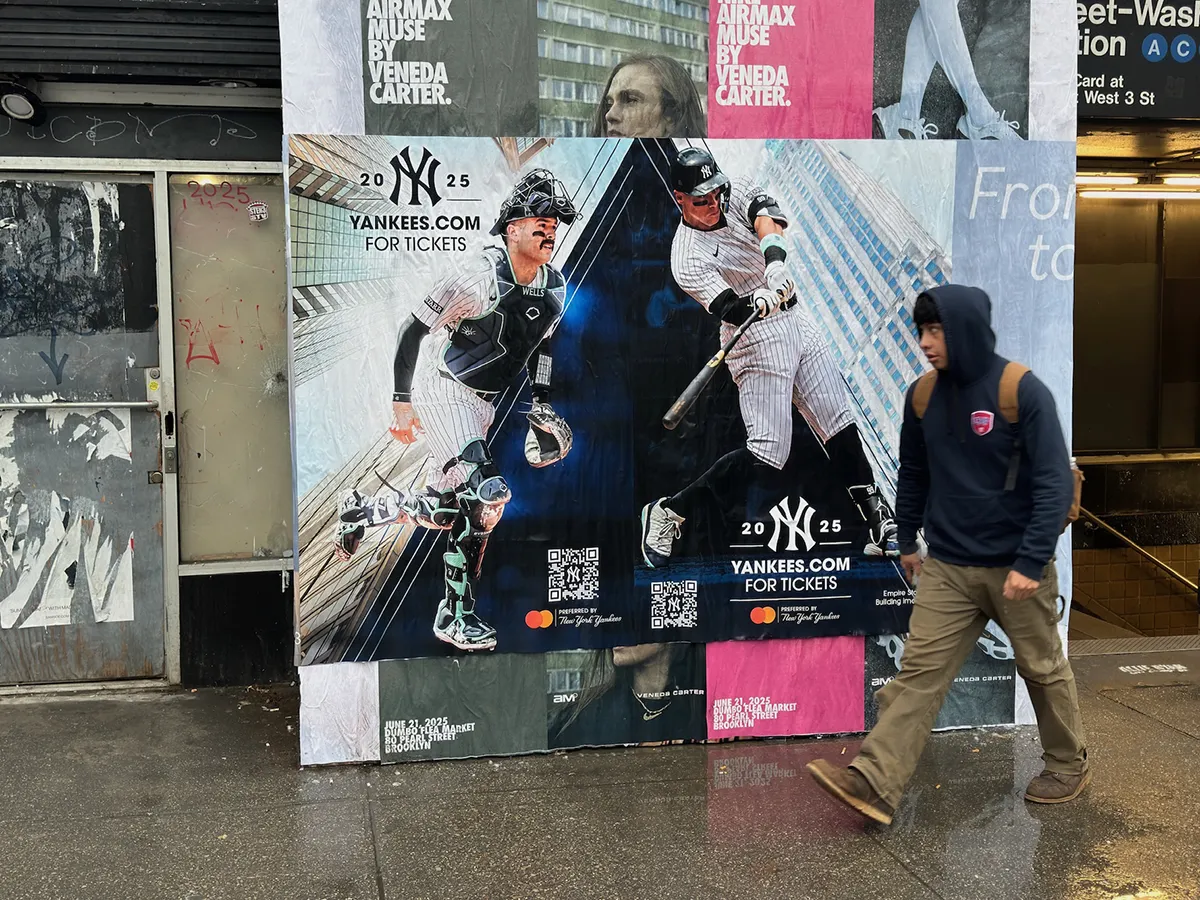
Most businesses recognize the look of wheatpasted posters immediately. What is less obvious is how much of that final result is determined before installation even begins. When a campaign looks uneven, lifts early, or fails to hold its shape, the issue is rarely just execution. It results from how the materials behave under real conditions and how they are handled at each step of the process.
Wheatpasting is a physical bonding process in which paper, adhesive, surface condition, moisture, and environmental exposure interact. When those variables are controlled, the result looks stable and intentional. When they are not, the same format produces inconsistent or short-lived work. Understanding that process is what allows a business to judge the quality of the work beyond just how it looks at a glance.
It Starts with The Print
Before paste is introduced and before the poster touches a wall, the process is already defined by the printed sheet. Most people think of the poster as a visual output, but in practice, it behaves like a material that must absorb moisture, flex under pressure, and conform to an uneven surface. That behavior is not secondary. It determines how the entire installation will respond once the process begins. If the material is wrong at this stage, nothing that follows can fully correct it.
Paper is composed of cellulose fibers, and those fibers respond immediately to moisture. When paste is applied, the sheet absorbs water and expands. That expansion is temporary, but it alters the material's dimensions and stability during installation. As the poster dries, it contracts back toward its original state. If that expansion and contraction is uneven, the sheet develops tension that shows up as distortion, wrinkling, or edge failure. These are not isolated defects. They are direct results of how the material behaves under moisture.
From a production standpoint, paper varies in ways that matter for this process. Thickness affects how easily the sheet can conform to a surface. Coating affects how moisture is absorbed or resisted. Flexibility determines whether the paper settles into texture or fights against it. Environmental conditions, such as humidity, also influence how stable the sheet is before installation even begins. A sheet that has already taken on moisture will react differently from one that is dry and controlled.
For a business, the implication is direct. The printed poster is not just a matter of image choice. It is a material decision that directly affects installation quality. Two campaigns can use identical artwork and still produce very different results if the underlying material behaves differently under real conditions.
What the Paste Actually Does
Once the print is defined, the next stage is not simply attaching it to a surface. The paste is what allows the system to function as a whole. It controls how the paper and the wall interact and how the poster transitions from a flexible, wet sheet into a fixed element on the surface. Without understanding what the paste is doing, it is easy to reduce it to a basic adhesive. In reality, it is the mechanism that governs the entire bonding process.
Starch-based paste works because it interacts effectively with paper fibers while remaining workable during installation. It allows the poster to be positioned and adjusted before it begins to set. As it dries, it forms a bond that holds the sheet in place. That combination of workability and strength is what makes it suitable for paper-based applications. At the same time, it introduces a controlled instability because the paste carries moisture into the sheet.
As described earlier, the paper expands when moisture is introduced, and this expansion must be managed while the bond is forming. If the paste is applied unevenly, the paper absorbs moisture at different rates, leading to distortion. If too much moisture is introduced, the sheet becomes overly soft and difficult to control. If too little is used, the bond may be weak or inconsistent.
At a practical level, the paste must do several things at once:
- Allow the sheet to be positioned without tearing
- Distribute moisture evenly across the surface
- Maintain enough tack to hold the poster during adjustment
- Dry into a stable bond without introducing stress
Each of these functions depends on how the paste is handled. This is why application technique matters as much as material choice. For a client, this is the point at which the difference between a controlled and a loose process becomes visible in the final result.

The Surface Changes Everything
With both the print and paste defined, the surface becomes the controlling variable. The wall is not a neutral background. It directly influences how the poster bonds, dries, and ultimately appears. Two installations using the same materials can produce completely different results depending on the surface they are applied to.
Surface condition is the first factor. A clean surface allows the adhesive to make full contact. Dust, residue, or debris interrupts that connection, creating weak points in the bond. Even minor contamination can cause lift or uneven adhesion as the poster begins to dry.
Porosity is the second factor. Surfaces that absorb some moisture allow the poster to settle more evenly because the adhesive layer integrates into the wall. Less porous or sealed surfaces do not absorb moisture as readily, which alters how the bond forms and how the paper behaves during drying. This affects both adhesion strength and finish quality.
Texture is the third factor. Rough surfaces force the paper to conform to irregular contours, which introduces localized stress. Smooth surfaces allow for a cleaner finish, but only if the adhesive layer is consistent and controlled.
These factors do not operate independently. They combine in ways that determine the final result:
- A clean but non-porous surface behaves differently from a porous but uneven one
- A textured wall increases the need for flexible paper and controlled application
- Contamination can override otherwise favorable conditions
For a business, this means the wall itself is part of the installation quality. Ignoring surface behavior leads to results that appear inconsistent even when the materials are the same.

How the Poster Is Applied
The installation stage is where all variables converge. At this point, the paper is wet and expanded, the paste is active, and the surface is determining how the bond will form. This is the most unstable moment in the entire process. The material is in transition, and everything that happens here will determine how the poster looks once it has dried.
During application, several processes occur simultaneously. The paper continues to absorb moisture and shift in dimension. The installer positions and aligns the sheet while it is still flexible. Pressure is applied to remove air pockets and evenly distribute moisture. At the same time, the adhesive begins to set, gradually fixing the poster in place.
This creates a narrow window in which the material must be carefully controlled. When that control breaks, the same failure patterns appear:
- Uneven drying leads to visible wrinkling
- Trapped air produces bubbles that remain after the poster sets
- Seams separate as the paper contracts during drying
- Edges lift where the bond is weakest or most exposed
From a material standpoint, this behavior is expected. Paper expands when wet and contracts as it dries. If that movement is not evenly controlled, stress builds within the sheet. That stress is what produces the defects that clients see after installation.
For a client, the quality of this stage is reflected in how stable and uniform the poster appears after drying. A clean finish is not just visual. It indicates that the material was managed correctly while it was most vulnerable.

What This Means for The Work You Are Buying
A wheatpasted campaign is the result of a chain of material interactions. The print, the paste, the surface, the application process, and the environment all contribute to the final outcome. Each step introduces variables that affect how the work looks and how it holds.
When those variables are controlled, the result appears consistent, stable, and intentional. When they are not, the problems that appear are not random. They are built into the process from the start. Two campaigns can look similar at a glance and still perform very differently because of how those variables were handled.
For a business, this is the point that matters. Wheatpasting is not just a format. It is a material system that either holds together or breaks down based on how it is managed. When that system is controlled, the work looks clean, holds correctly, and performs as expected. When it is not, the issues you see are the direct result of decisions made before the poster ever reached the wall.