Should We Use Posters, Projections, Stickers, or Stencils for Our Campaign?
The Briefing Dilemma: Which Tactic Fits Your Campaign Brief?
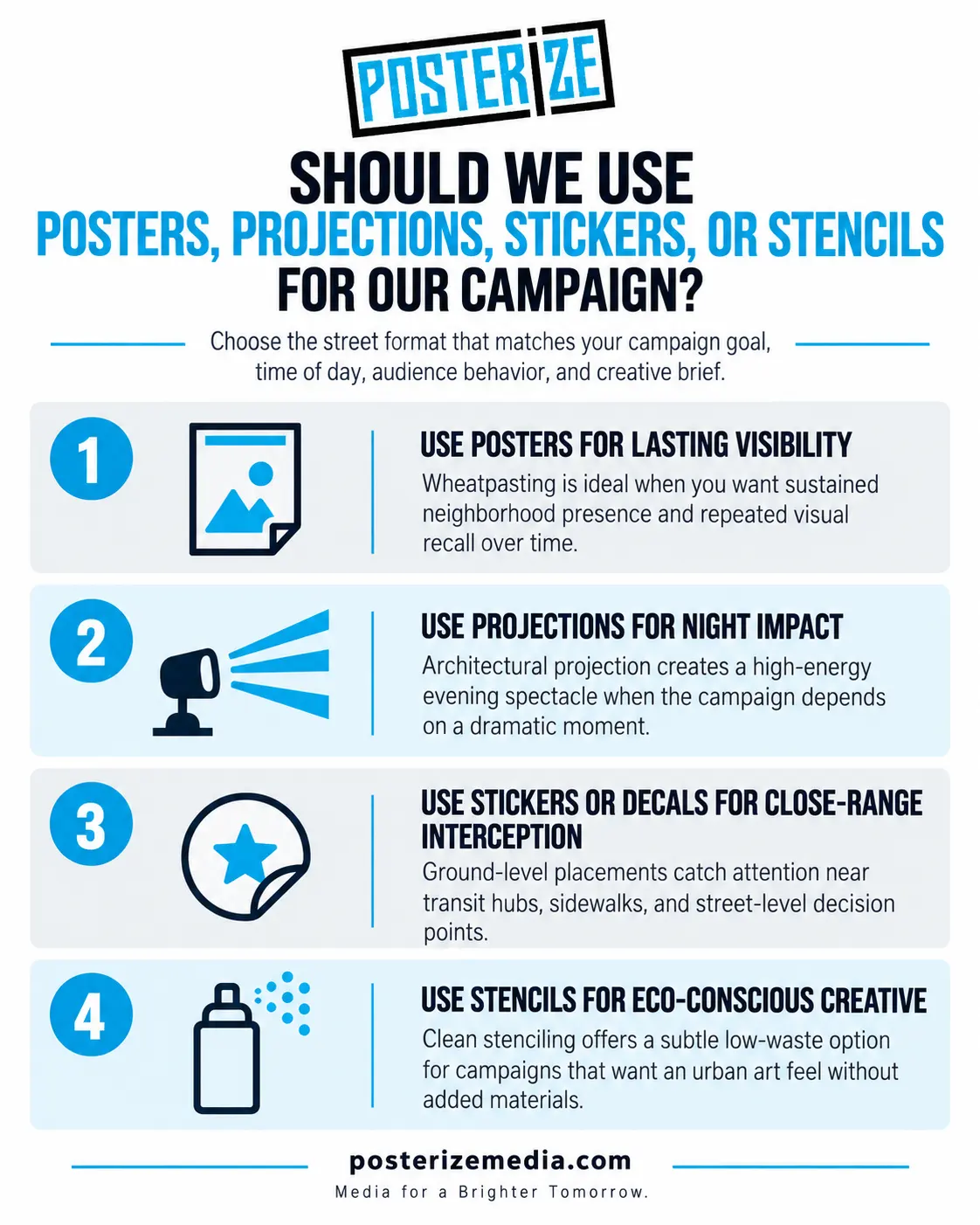
When brand marketing directors, creative producers, and agency teams begin planning an experiential street push and high-impact guerrilla marketing campaign in New York City, their immediate challenge is tactical rather than theoretical. They already have an upcoming product launch, major entertainment debut, or brand event scheduled, and they know they want an unconventional, physical street presence. The real question confronting the team is practical: Should we use posters, projections, stickers, or stencils for our campaign?
Guerrilla marketing in New York City is not a single generic stunt, but an intentional physical toolkit where each format operates across distinct visual planes, daily pedestrian flows, and neighborhood environments. Choosing the right medium isn't about finding a universally superior channel; it's about matching your campaign goals, creative assets, and flight timeline to the physical city. Understanding how each format functions in the real world enables marketing leaders to deploy their creative concepts with maximum precision and authentic cultural resonance.
When You Need Sustained Neighborhood Visibility: Wheatpasting Street Posters
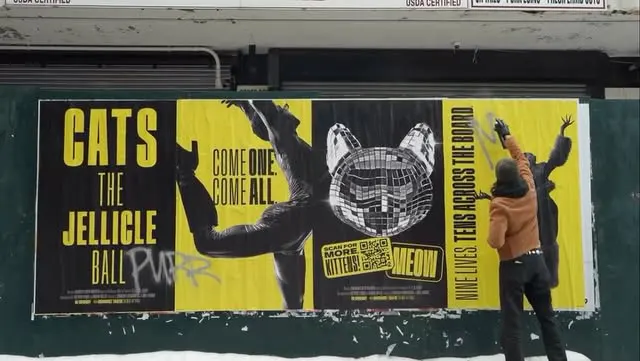
Consider a campaign scenario involving an emerging lifestyle and footwear brand preparing for a high-profile autumn rollout. The marketing team needed to establish strong, persistent visibility across creative epicenter neighborhoods including SoHo, the Lower East Side, and Williamsburg over a continuous three-week flight leading up to New York Fashion Week. Rather than relying on a single fleeting media moment, the objective demanded repeated daily visual exposures among trend-conscious pedestrians as they moved between morning coffee spots, design studios, and evening retail corridors.
For sustained neighborhood saturation and cumulative visual recall, wheatpasting represents the definitive tactical solution. Wheatpasting involves affixing specially printed, high-grade paper posters to permitted construction barricades and sidewalk sheds along high-density pedestrian routes. Placed between four and eight feet above the sidewalk, wheatpaste posters sit directly within the natural eye-level sightline of passing commuters. Applied with weather-resistant paste, the installations endure heavy rain and dense urban foot traffic, allowing brands to blanket entire blocks with repetitive panels or monumental multi-sheet murals that build steady recognition throughout a multi-week launch.
When You Need High-Impact Nighttime Spectacle: Architectural Video Projection
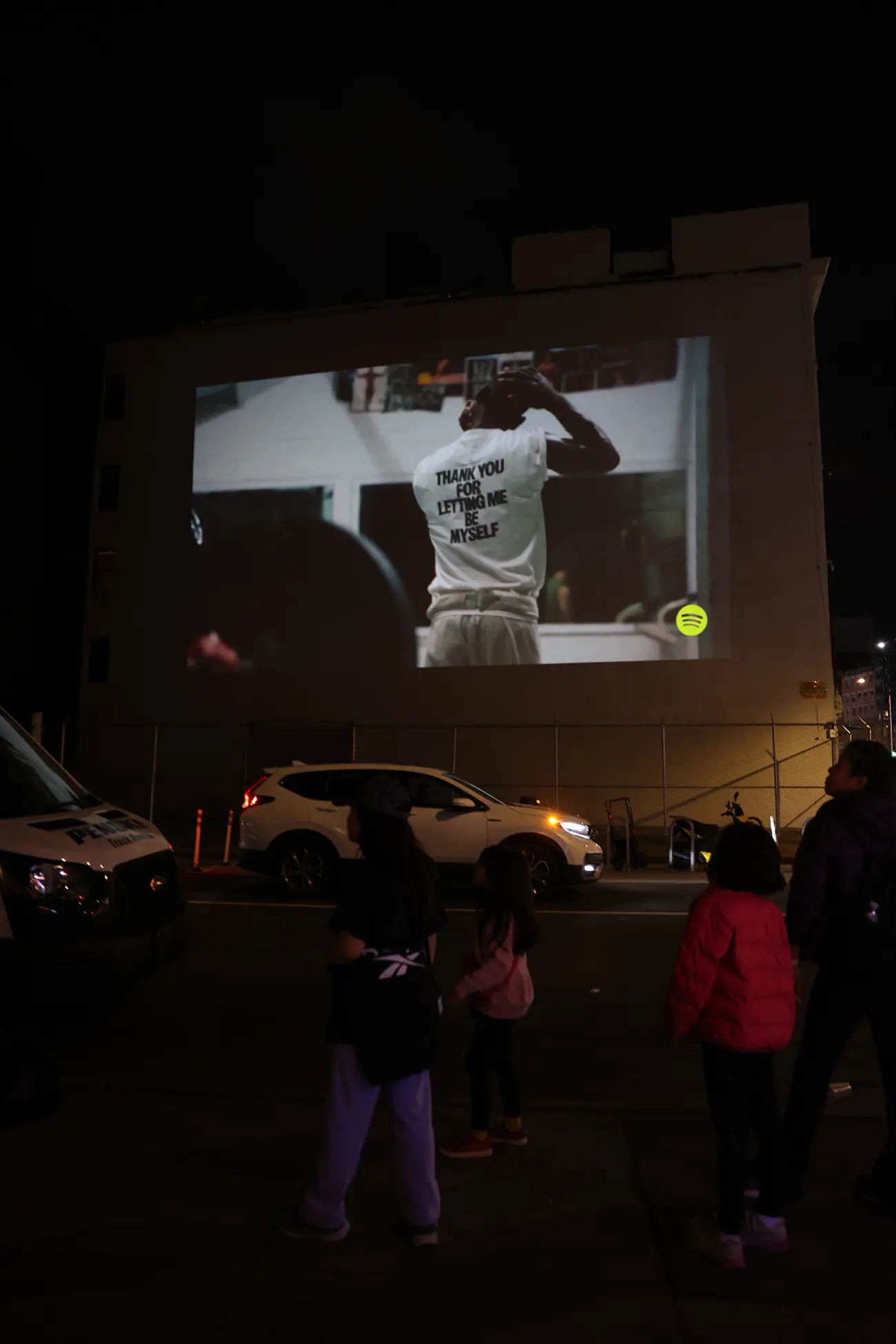
Contrast that with an entertainment streaming network launching a flagship sci-fi series. The network's promotional schedule centered on a specific premiere evening, requiring an unmissable, high-energy spectacle across Manhattan's Meatpacking District and Brooklyn's DUMBO waterfront. The objective was not multi-week static persistence, but immediate theatrical awe, crowd gathering, and widespread real-time smartphone video capture that could fuel digital conversation across social channels.
At dusk, architectural video projection transforms historic multi-story brick facades, industrial warehouse walls, and soaring masonry into monumental dynamic screens. Utilizing commercial-grade, high-lumen digital projection units, brands can broadcast high-definition motion graphics, cinematic trailers, live countdowns, or interactive visual storytelling across entire building surfaces. Mobile projection units also offer tactical agility, allowing brand teams to illuminate multiple high-traffic nightlife corners in a single evening, following the natural flow of evening crowds from dining districts to nightlife corridors while prompting spontaneous social sharing.
When You Need Close-Range Pedestrian Interception: Sidewalk Decals and Stickering
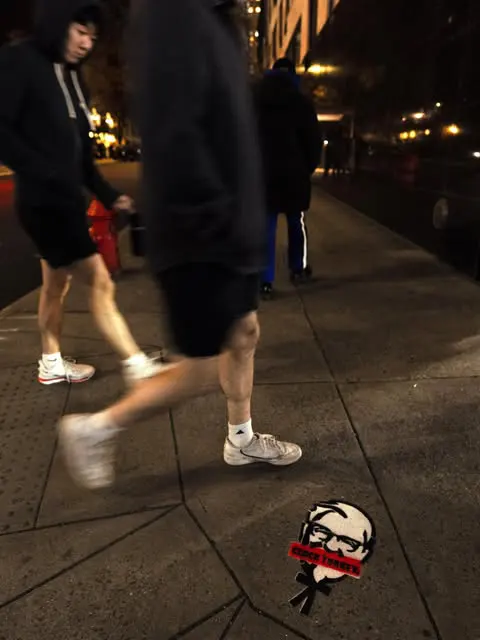
In another real-world scenario, a direct-to-consumer mobile application launching an on-demand delivery service sought to capture consumer attention near major transit hubs, including Union Square, Astor Place, and Midtown Manhattan. The marketing goal was highly transactional and localized: drive immediate app downloads and guide foot traffic directly to nearby partner retail locations running trial promotions. Because commuter traffic through these transit plazas moves quickly, the campaign needed a medium that could intercept consumers at point-blank range the moment they stepped onto the street.
In bustling urban corridors, pedestrians spend a substantial percentage of their transit time looking downward to navigate crowded walkways, curb cuts, crosswalks, and subway stairwells. Ground-level sidewalk decals intercept consumer attention along an unexpected visual plane that vertical advertising often misses. Made with heavy-duty textured aluminum foil substrates that micro-conform to irregular concrete and asphalt, these graphics feature high-traction, non-skid coatings that meet municipal safety standards. Whether deployed as directional wayfinding arrows or high-contrast medallions with scannable QR codes, sidewalk decals deliver actionable prompts at point-blank range.
When Your Concept Calls for Subtle, Eco-Conscious Street Art: Clean Stenciling
A growing number of modern campaigns involve brands whose core identity centers on environmental sustainability, organic materials, or low-impact manufacturing. Consider a sustainable outdoor apparel company preparing to introduce a zero-waste footwear line across Williamsburg, Greenpoint, and Flatiron. The marketing brief explicitly prohibited disposable plastics, single-use adhesives, and chemical inks that might conflict with the brand's public commitment to environmental stewardship.
Under these creative parameters, clean stenciling—often called reverse graffiti—offers an elegant, fully eco-friendly alternative. Rather than applying foreign pigments or stickers to urban surfaces, clean stenciling utilizes high-pressure water streams directed through custom laser-cut metal stencils to wash away accumulated sidewalk grime and street dust. The resulting contrast between the cleaned concrete and surrounding pavement reveals crisp, highly legible brand text directly on the ground. Because the installation uses zero chemicals and naturally re-weathers over several weeks, it subverts commercial advertising expectations and sparks genuine intrigue among design-literate urban communities.
The Multi-Format Advantage: Coordinating Day-to-Night Presence
While each street marketing format has distinct tactical strengths, the most successful New York City campaigns often achieve their greatest cultural resonance by integrating several formats into a unified experience. An orchestrated multi-format strategy engages the target audience across different times of day, varying pedestrian mindsets, and multiple visual planes throughout their daily urban transit. Rather than relying on a single visual touchpoint, a coordinated multi-channel approach surrounds pedestrians naturally throughout their daily routines, elevating an activation into a synchronized citywide presence.
During a major product launch across Lower Manhattan, a brand can deploy wheatpasting along creative commuter corridors for steady daytime visual frequency, apply non-slip sidewalk decals at adjacent subway exits for immediate wayfinding, and activate mobile video projections against historic facades in evening nightlife districts. This day-to-night continuity creates the palpable impression that a brand is woven directly into the fabric of the city. Achieving this level of synchronization requires turnkey execution, managing large-format printing, specialized substrate installation, strategic field routing, municipal compliance, and evening technical operations under a single coordinated team.
Tactical Comparison: Matching Format to Campaign Objectives
Selecting the appropriate tactical execution requires evaluating environmental conditions, audience sightlines, and creative production formats side by side. Each street format operates under distinct physical parameters that dictate when and where it performs best across New York City. The following comparison table synthesizes the operational characteristics, optimal environments, and strategic strengths of each tactical option.
Tactical Format | Primary Objective | Optimal Time of Day | Pedestrian Sightline | Ideal Urban Setting | Best Creative Format |
Wheatpasting | Sustained neighborhood awareness and cumulative visual recall | Continuous 24/7 day and night visibility | Eye-level vertical plane (4 to 8 feet above ground) | Permitted construction barricades and high-traffic commuter routes | High-contrast typography, bold graphic design, editorial photography |
Architectural Projection | High-impact evening spectacle, launch buzz, and theatrical crowd stopping | Dusk through late evening hours | Elevated monumental plane across multi-story facades | Historic brick facades, masonry walls, and evening nightlife districts | Cinematic motion video, animated trailers, live countdowns, motion graphics |
Sidewalk Decals | Point-blank pedestrian interception and direct-response wayfinding | High daytime and early evening foot traffic | Downward horizontal plane on sidewalks and walkways | Subway exits, transit plazas, and pedestrian crosswalk intersections | Concise action prompts, directional arrows, scannable QR codes, logos |
Clean Stenciling | Eco-friendly, subtle brand curiosity and low-impact street presence | Daylight hours with high pavement visibility | Downward horizontal plane on concrete surfaces | Wide textured sidewalks in creative and retail commercial corridors | Clean typographic messages, iconic logos, minimalist line art |
Bringing Your New York Street Campaign to Life with Posterize Media
Executing high-impact guerrilla marketing in New York City requires far more than creative ambition. It demands intimate familiarity with neighborhood foot-traffic flows, architectural textures, municipal permitting guidelines, specialized weather-resilient print substrates, and precision field logistics. Without experienced local operational stewardship, even the most innovative creative concepts risk poor placement, rapid wear, or logistical delays.
Posterize Media operates as a dedicated turnkey partner for leading consumer brands, creative agencies, entertainment networks, and event producers seeking unforgettable real-world presence in New York City. From initial tactical strategy, location scouting, and route planning through to high-resolution printing, permitted site installation, evening projection management, and professional photo and video capture, our team manages every stage of physical execution. To discuss your upcoming campaign objectives and determine the optimal tactical mix for your brand, connect with the strategy and production team at Posterize Media today. Whether deploying single-tactic neighborhood saturation or an orchestrated multi-format takeover, our street specialists deliver the craftsmanship needed to turn creative vision into cultural reality.