Comparing Street Marketing Campaigns and Guerrilla Marketing
Clients do not always know what to call the campaign they want. They may say street marketing, guerrilla marketing, wildposting, posters, stickers, sampling, or brand activation. Most are not asking for a lesson in terminology. They are trying to figure out how to make a brand show up in the real world where the right people already move.
At Posterize Media, we see this in the first conversation. Clients do not usually ask for a formal “street marketing campaign.” They often ask for wildposting first, then we help them understand what other formats may fit the same goal. Street marketing and guerrilla marketing overlap, but the label is rarely the most important decision. A strong campaign depends on the targeted audience, market, timing, number of locations, budget, neighborhood strategy, execution, and proof.
The Label Starts the Conversation, Not the Strategy
Street marketing usually describes where the campaign lives: in public, street-level environments where people walk, wait, commute, shop, gather, or pass through. Guerrilla marketing usually describes the campaign’s attitude: unexpected, unconventional, and designed to earn attention outside standard media placements. In real planning, those ideas often meet in the same campaign.
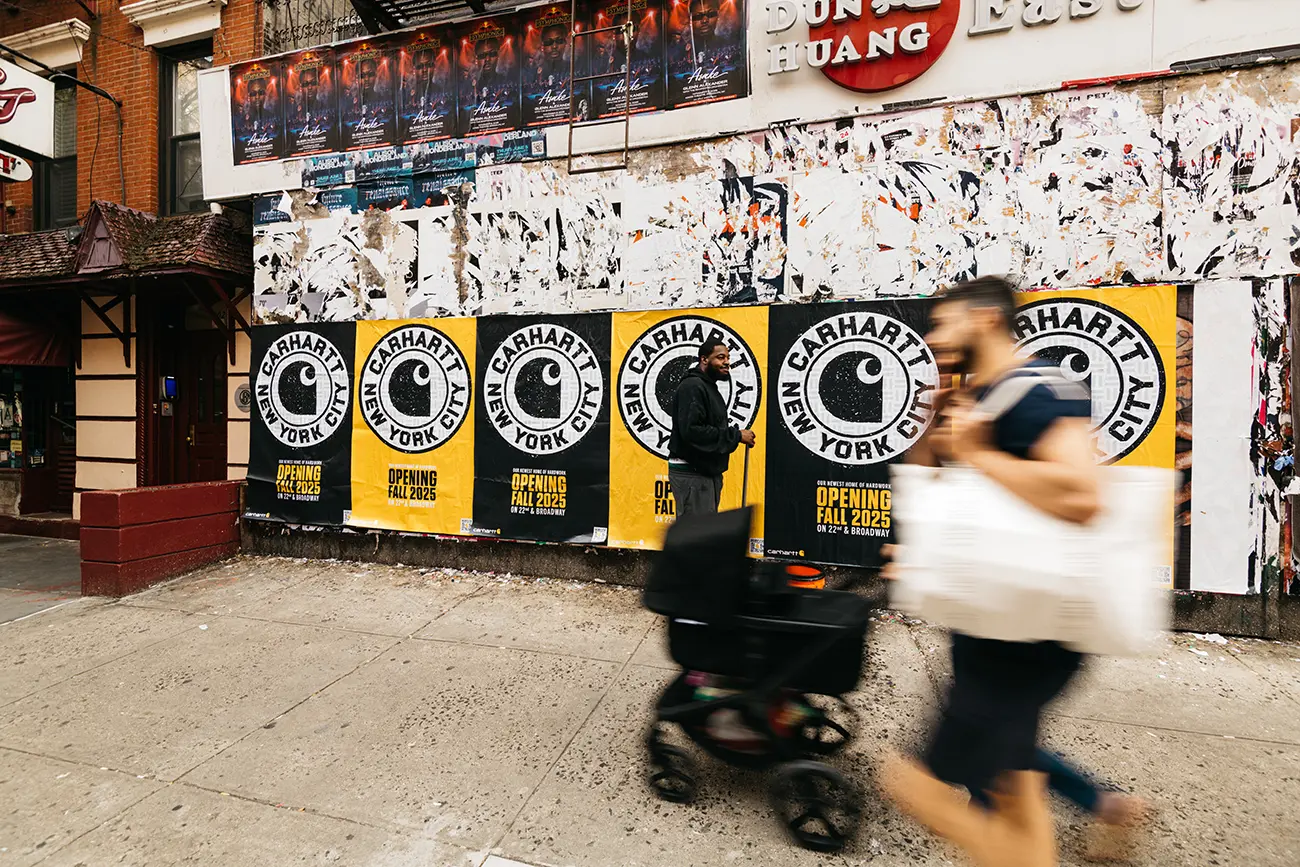
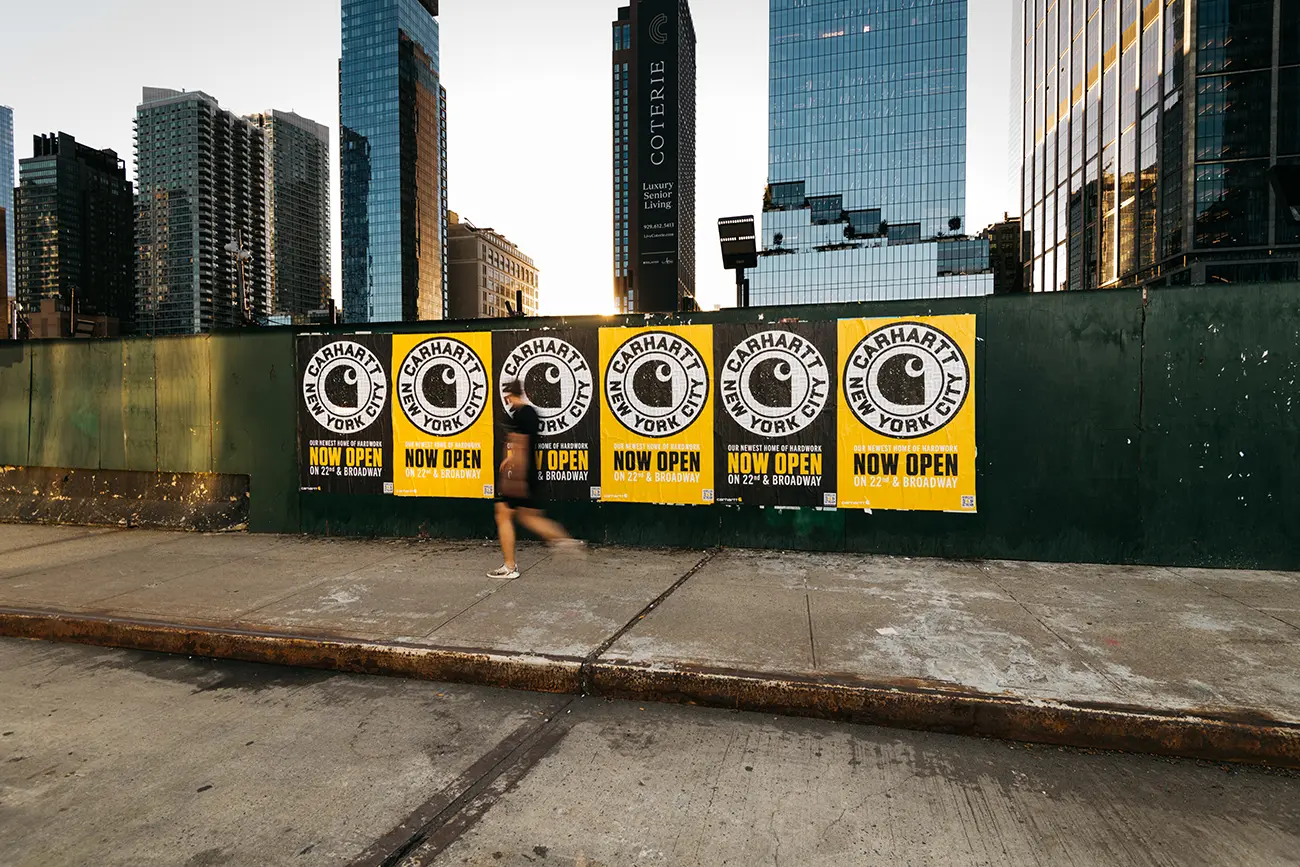
A wildposting campaign is a good example. It is street marketing because it lives in the physical environment. It can also function as guerrilla marketing when the creative, timing, neighborhood, and placement make the message feel sharp, unexpected, and tied to the street. That overlap is why we do not treat the terms like separate boxes. We treat them as starting points.
The better question is not, “Is this street marketing or guerrilla marketing?” The better question is, “What job does this campaign need to do?” The answer changes the plan.
| Client Starting Point | What They Usually Mean | What We Need to Plan |
| “We want street marketing” | We want to reach people in public space | Audience, neighborhoods, timing, format, and proof |
| “We want guerrilla marketing” | We want something noticeable or unexpected | Creative impact, placement logic, and field execution |
| “We want wildposting” | We want visible physical media in the street | Location count, market fit, density, budget, and documentation |
This table matters because the first phrase a client uses is not a complete brief. It only tells us where the conversation begins. The real campaign takes shape when we connect the tactic to the people, places, timing, and proof needed for impact.
Most Clients Ask for the Tactic First
Clients often come to us with a format in mind, especially wildposting. That makes sense. Wildposting is visible, familiar, and easy to picture. A client may have seen a campaign on a construction wall, near a venue, outside a retail district, or across a high-foot-traffic neighborhood and want that same street presence for their brand.
The problem is not that the client asks for a tactic. The problem comes when the tactic gets treated as the whole strategy. A wildposting campaign in the wrong neighborhoods will not become strategic because the creative looks strong. A sticker campaign without audience logic will feel random. A projection, poster, or street-level activation loses value when the location does not match the market.
That is why we use the first request as the starting point for planning, not the end. Before we recommend a campaign direction, we need to understand the conditions under which the tactic will be used.
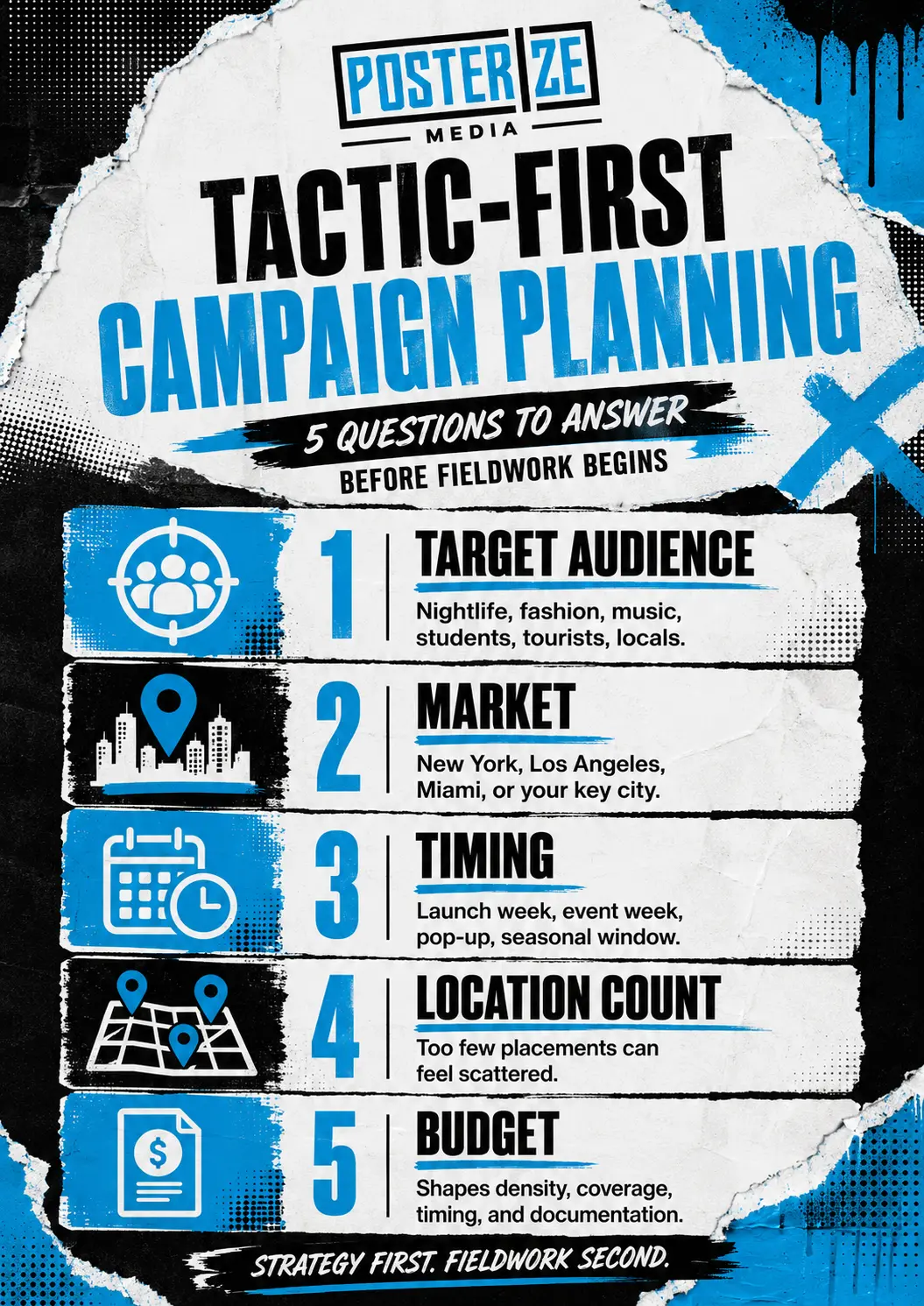
A tactic-first request has to answer these questions before fieldwork begins:
- Who is the targeted client or audience?A campaign for nightlife, fashion, music, students, tourists, or local residents should not use the same map.
- Which market matters most?A campaign built for New York, Los Angeles, Miami, or another major market needs placement logic tied to how that city moves.
- What timing gives the campaign urgency?Launch week, event week, pop-up timing, and seasonal windows change how fast and dense the campaign needs to feel.
- How many locations create enough presence?Too few placements may look scattered, even when the artwork is strong.
- What budget supports the level of impact needed? Budget affects location count, neighborhood coverage, campaign density, timing, and documentation.
These questions are not extra steps. They are the difference between placing materials and building a campaign. The tactic gives the campaign a format. The planning gives the campaign a reason to exist in those exact places.
Neighborhood Strategy Separates Campaigns From Random Placement
A street-level campaign fails when it treats the city like empty space. The goal is not to put materials “around town.” The goal is to show up in the neighborhoods where the target audience already lives, works, waits, shops, attends events, or moves through the day.
This is where street marketing and guerrilla marketing become less about labels and more about media planning. In the “OOH Glossary of Terms” (Out of Home Advertising Association of America, 2022), distribution is defined as the strategic placement of out-of-home units across a market. That definition matters because it connects placement to audience, not just geography. A campaign map should not ask only where space exists. It should ask where the right people are most likely to encounter the message.
Geopath’s “Audience Fundamentals: Audience Segmentation,” 2021, supports the same point from a measurement perspective. Geopath explains that audiences can be segmented by shared traits and narrowed by geography, including ZIP Codes, Census Tracts, and Census Block Groups. That means a smaller, more targeted area may be more valuable than a broader placement plan that reaches the wrong audience.
The street itself also changes how the message works. In “Street Marketing: How Proximity and Context Drive Coupon Redemption,” arXiv/Cornell, 2020, Sarah Spiekermann, Matthias Rothensee, and Michael Klafft found that proximity, part of town, weather, and financial incentives interacted with campaign performance. The study focuses on coupon redemption, but the planning lesson applies directly to street-level media: context changes response.
The planning shift looks like this:
| Weak Planning Question | Stronger Campaign Question |
| Where can we put materials? | Which neighborhoods match the target audience? |
| How do we get attention? | What location, timing, and format make the message relevant? |
| How many placements can we buy? | How many locations create enough presence in the right market? |
| Is this guerrilla marketing? | Does the campaign feel intentional in the field? |
| Did the campaign run? | What proof shows where and how it ran? |
A campaign becomes strategic when the location choices align with the audience and the campaign goal. Without that connection, the work may be visible, but it will not feel built for the market.
Impact Depends on Presence, Timing, and Proof
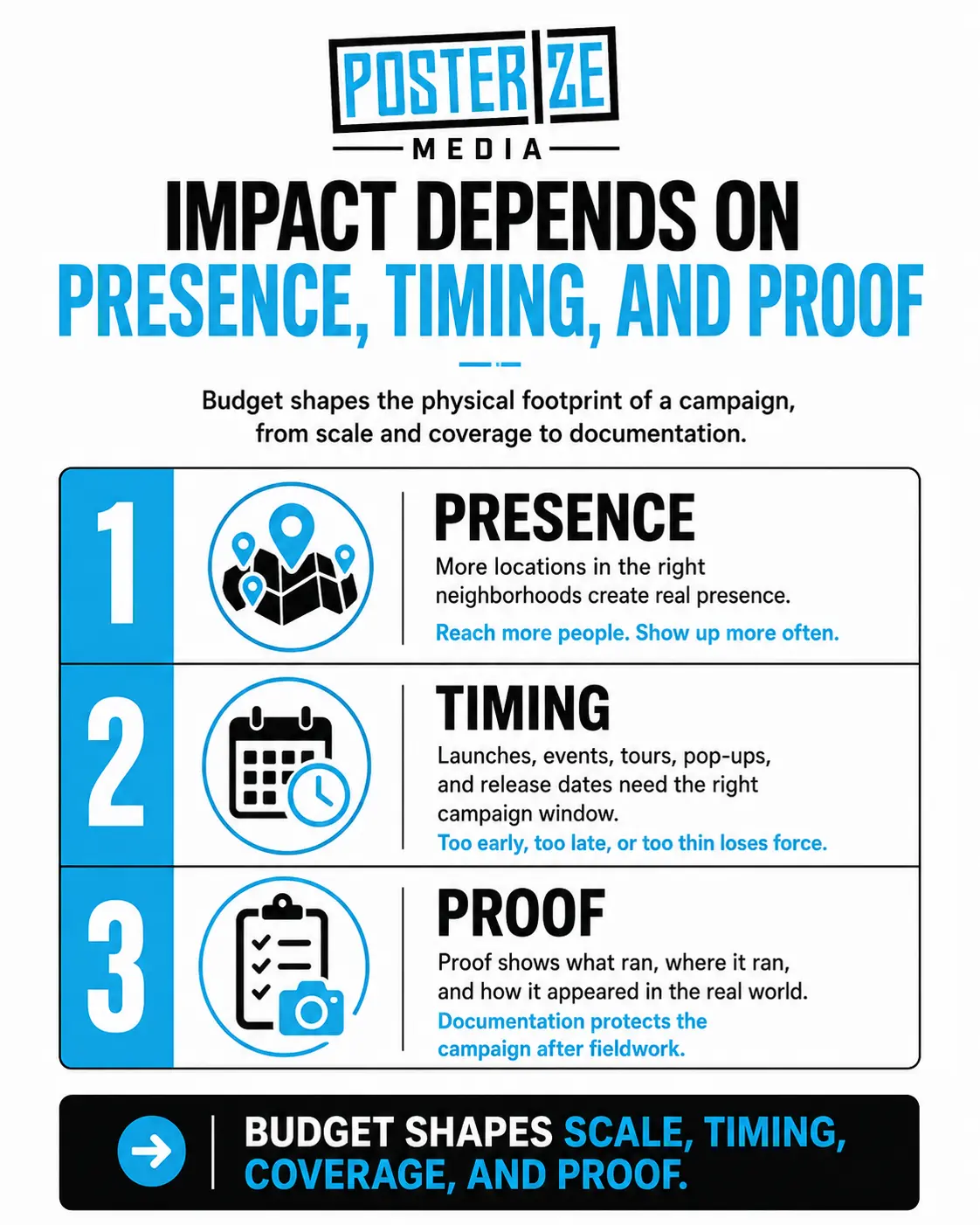
Budget matters because impact has a physical footprint. It affects how many locations the campaign includes, how many neighborhoods it reaches, and whether the campaign feels concentrated enough to register. Budget is not only a cost issue. It shapes the scale of the plan.
- Presence:Geopath’s “Measurement Foundations: Reach and Frequency,” 2021, explains that reach measures how many different people are exposed to advertising, while frequency measures how often they are exposed. A street-level campaign does not need to turn into a media math lesson, but the principle matters. One placement may create a moment. A planned group of placements in the right neighborhoods creates presence.
- Timing:Timing carries the same weight. A campaign tied to a launch, event, tour, pop-up, or release date has a narrower window to matter. The location plan has to support that moment. A campaign that shows up too early, too late, or too thin across the market loses force.
- Proof:Proof protects the campaign after the fieldwork happens. In “OOH Glossary of Terms,” OAAA, 2022, defines proof-of-performance as certification that contracted out-of-home services were rendered. For street-level campaigns, proof helps clients see what ran, where it ran, and how it appeared in the real world.
This is where the label matters least. A client may call the work street marketing, guerrilla marketing, or wildposting. The campaign still needs the same core pieces.
- A defined audience.
- A market and neighborhood strategy.
- A format that fits the campaign goal.
- Enough locations to feel intentional.
- Timing that supports the launch, event, or visibility window.
- Proof that shows the campaign ran in the field.
Those pieces turn a public-space tactic into a planned campaign. Without them, the campaign becomes easy to describe but hard to defend.
Choose the Campaign by the Job
Street marketing and guerrilla marketing overlap in real campaign planning. The distinction is useful only when it helps clients think more clearly about what they are trying to accomplish. Street marketing points to the public environment. Guerrilla marketing is an unconventional way to earn attention. Both still depend on audience, market, timing, locations, budget, execution, and proof.
At Posterize Media, we start with the campaign problem, not the category name. A client may come in asking for wildposting, then leave with a stronger plan after we review the audience, market, timing, number of locations, and the level of impact needed. The label starts the conversation. The strategy decides whether the campaign has enough presence to matter.