How Posterize Helps Brands Choose the Right Street Marketing Activation
Most clients do not need to know every street marketing format before they contact Posterize. They need to know what they want the campaign to accomplish. From there, Posterize asks the right questions, explains what the requested tactic can and cannot do, and recommends the campaign type that fits the goal.
Sometimes that means building exactly what the client asked for. Sometimes it means adjusting the plan. A client might call asking for wheatpasting, but after talking through the location, audience, message, budget, and creative, the better campaign might include stickers, stencils, projections, QR codes, social capture, or another supporting tactic.
The goal is not to force every campaign into one format. The goal is to ensure the activation aligns with what the brand needs people to see, remember, scan, visit, share, or experience on the street.
The First Step Is Understanding What the Client Is Trying to Do
When someone does not know what type of street marketing campaign they want, Posterize starts with practical questions. These questions help narrow the campaign before anyone talks about posters, stickers, projections, or stencils.
Posterize usually asks:
- Where do you want to advertise?
- Who do you want to target?
- What message do you want to convey?
- Where is your customer located?
- Do you want one specific location or a broader market presence?
- Do you need content, interaction, visibility, or a mix of those goals?
These questions matter because a street campaign changes based on where the audience moves and what the brand needs from the placement. A campaign near a venue entrance is not the same as a campaign spread across a neighborhood. A campaign built for social content is not the same as one built for repeated awareness. A campaign that needs customer interaction is not the same as a wall-based poster campaign.
Posterize uses those answers to decide whether the client’s first idea fits or whether another activation type should be part of the plan.
When a Client Asks for Wheatpasting, Posterize Checks the Fit
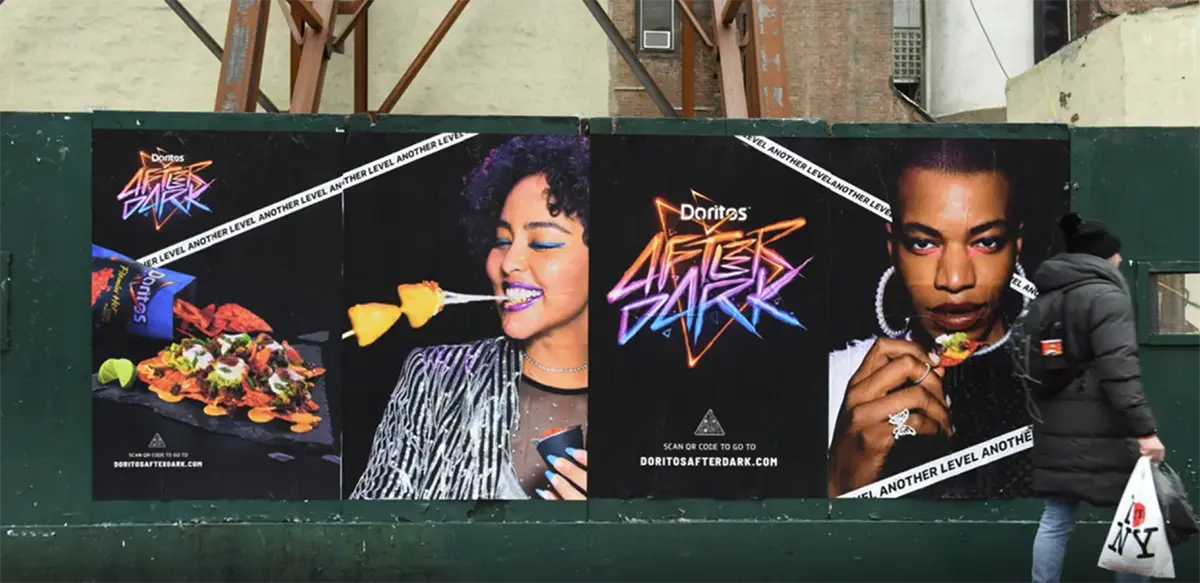
Many clients come in asking for wheatpasting because they recognize the look. They have seen posters layered across walls, construction barricades, storefront areas, and high-traffic streets. They know the format feels public, physical, and hard to ignore.
However, asking for wheatpasting is not the same as knowing whether wheatpasting fits the campaign.
What Posterize Asks First
When a client asks for wheatpasting, Posterize wants to know if they understand the medium.
That means asking:
- Do you understand the grittiness of the medium?
- Do you understand that this is a guerrilla tactic?
- Do you want a specific location?
- Or do you want to make a splash in the market with multiple locations?
This is important because wheatpasting has a specific street character. It is not polished like a traditional billboard. Posters sit on real walls and surfaces. They have texture, paste, edges, layering, and street wear. That look can be exactly right for entertainment, fashion, music, nightlife, launches, and culture-driven campaigns. It can also be wrong for a brand that wants a cleaner or more controlled media environment.
When Wheatpasting Works Best
Wheatpasting usually makes sense when the client wants repeated visibility across an area. The campaign can appear in multiple locations, creating the sense that the brand is present throughout a market rather than in a single isolated spot.
It works best when the goal is:
- Market visibility
- Repeated brand recall
- A gritty public look
- Launch awareness
- Street-level presence
- A larger visual splash across multiple locations
If the client wants one exact location, wheatpasting might still be part of the campaign, but Posterize may recommend adding a more precise tactic.
When the Client Needs an Exact Location, Stickers or Stencils May Fit Better
Some clients do not need broad coverage. They need to appear near a specific place. That might mean a venue, store, event entrance, sidewalk path, college area, nightlife zone, transit point, or neighborhood target.
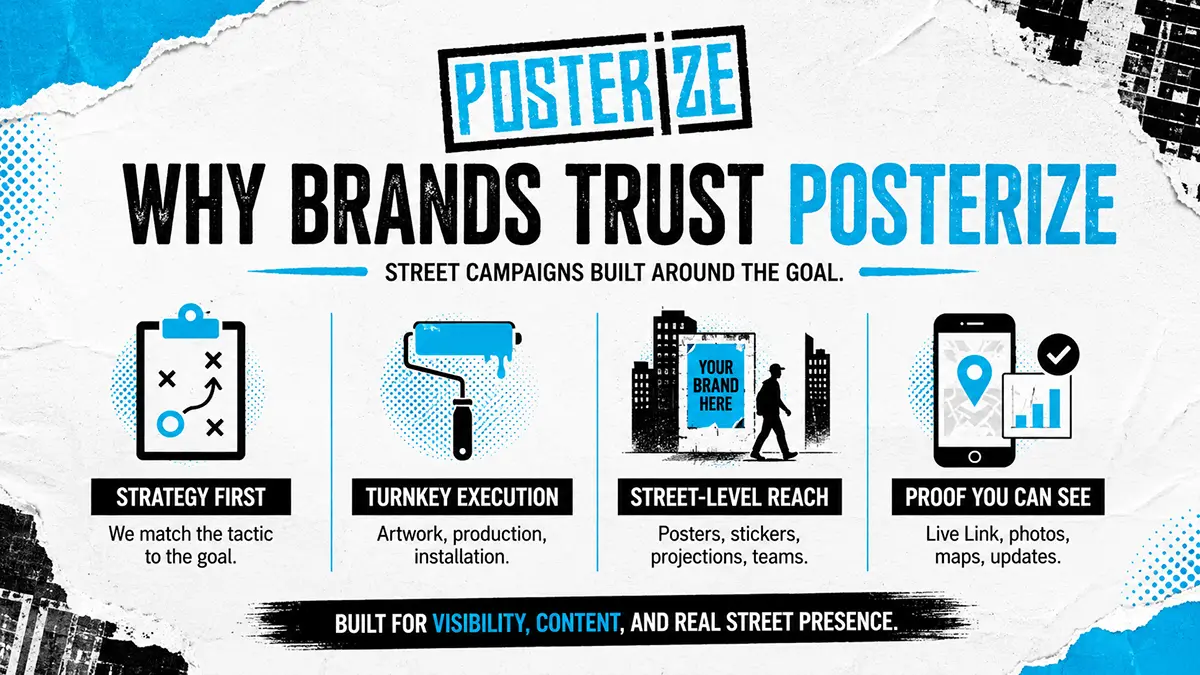
In those cases, Posterize may look at stickers or stencils because they can pinpoint an exact target more easily than a broader poster campaign.
When Stickers Make Sense
Stickers work when the message needs to be close, simple, and visible at street level. They are not designed to carry long explanations. They work best for short marks, logos, QR prompts, campaign symbols, simple phrases, or visual cues people can quickly understand.
Stickers can support a larger campaign by adding smaller touchpoints near the audience.
When Stencils Make Sense
Stenciling works when the ground, path, or immediate location matters. It can help guide attention near sidewalks, entrances, routes, and high-foot-traffic areas.
Stencils make sense when placement precision matters more than large-scale visual coverage.
When Projection Makes More Sense than Posters
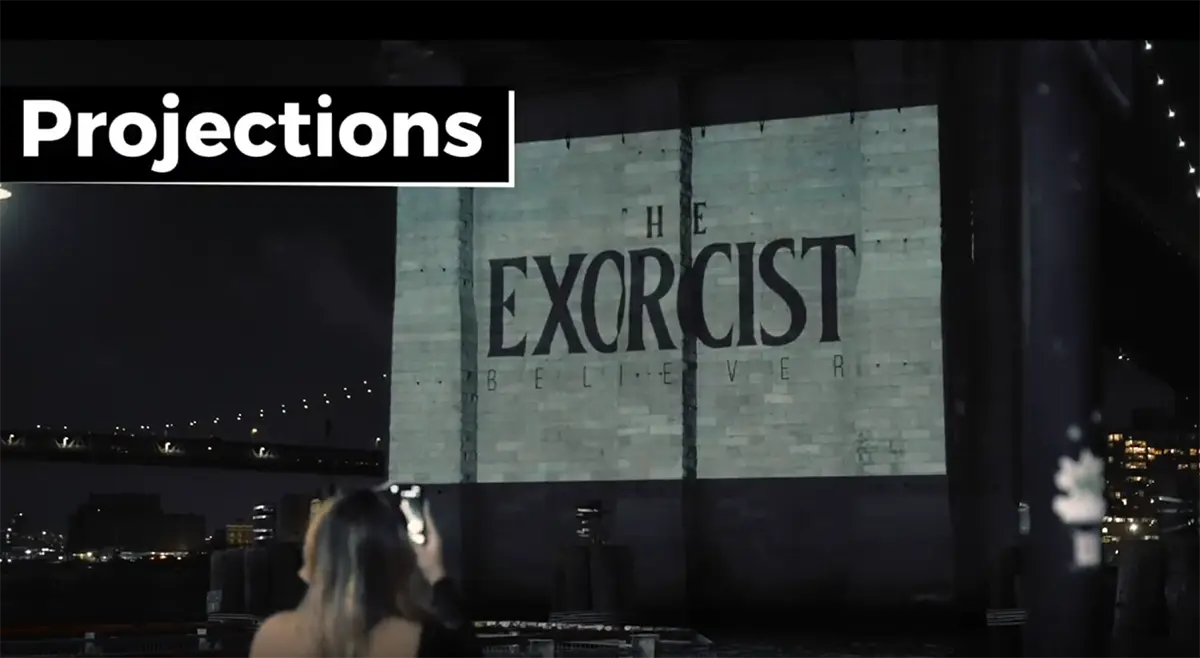
Projection is different from wheatpasting, stickers, or stenciling because it creates a timed visual moment. It works best when the campaign needs scale, nighttime visibility, and content value.
A client might ask for posters because they want visibility, but if the goal is a short-term launch moment that people film or photograph, Posterize may recommend projection instead or as an add-on.
Projection can make sense when the client wants:
- A large visual moment
- Nighttime attention
- A campaign reveal
- Social content
- A strong presence near an event or high-traffic area
- A format that feels different from standard outdoor advertising
Projection depends heavily on location. The surface, sightline, ambient light, timing, and surrounding foot traffic all affect whether the activation works. That is why Posterize does not treat projection as a generic replacement for posters. It fits a different campaign need.
What Campaign Goals Point toward Each Format
Posterize first looks at the campaign goal, then recommends the format that best fits. The format is not chosen because it sounds interesting. It is chosen because it matches the outcome.
Client goal |
Format Posterize may recommend |
Why it fits |
Make a splash across a market |
Wheatpasting |
Multiple placements create repeated street presence. |
Reach one exact target area |
Stickers or stencils |
These formats can work closer to a specific location. |
Create content |
Projection, wheatpasting, social capture |
Visual street formats can give the brand content to use after installation. |
Add edge or a different feel |
Wheatpasting, stickers, stencils |
These formats feel more street-level than standard outdoor. |
Reach areas normal outdoor does not cover |
Guerrilla placements or mixed tactics |
Street formats can appear closer to where the audience moves. |
Combine visibility, content, and interaction |
Mixed campaign |
Each tactic handles a different part of the goal. |
This is where Posterize’s role becomes important. A client might ask for one thing, but the actual campaign goal may require more than one layer.
When Posterize Recommends Adding another Tactic
Posterize may recommend adding another tactic when the client’s first request solves only part of the goal.
For example, a client might ask for wheatpasting because they want visibility. That might be the right base campaign. However, if the client also wants close-range audience contact, a response path, or social content, Posterize may suggest adding another layer.
That could include:
- Stickers for smaller street-level touchpoints
- Stencils for exact-location or route-based messaging
- Projection for a nighttime visual moment
- QR codes for response tracking or traffic
- Social capture for reusable campaign content
This is not about adding tactics for the sake of adding tactics. It is about matching the campaign to what the client is trying to accomplish.
If the client only needs repeated visibility, one format may be enough. If the client needs visibility, content, interaction, and response, one format may leave gaps.
Location, Timing, Budget, Creative, and Audience Shape the Recommendation
Posterize also examines the practical factors that determine whether a campaign works in the real world. These factors can change the recommendation even when the client already has a format in mind.
- Location:Location affects everything. A tactic that works well across several wall placements may not be the best option for one exact target. A projection needs the right surface and viewing angle. Stickers and stencils work better when the campaign needs close-range placement.
- Timing:Timing determines whether the campaign should build presence over several days or create a single sharp moment. Wheatpasting can support repeated exposure. Projection works best as a timed visual event. Sampling depends on when people are present and willing to interact.
- Budget:Budget affects scale, mix, and coverage. Posterize offers programs for different budgets, but the recommendation still needs to be realistic. A focused campaign in the right place is stronger than spreading the budget across too many tactics without enough impact.
- Creative:Creative affects the format. Posters need bold visuals that work with repetition. Stickers need simple marks. Projection needs contrast and scale. Stencils need short, direct messaging. Sampling needs materials that help a person quickly understand the offer.
- Audience:The audience determines where and how the campaign should appear. A nightlife audience, retail audience, student audience, commuter audience, event audience, or local neighborhood audience does not move through the street the same way.
Posterize uses these factors to shape its recommendations, rather than treating every campaign as a single package.
The Right Campaign Type Comes From the Goal
A client does not need to know every guerrilla marketing format before the first call. They need to know what they want the campaign to accomplish.
If they ask for wheatpasting, Posterize can help determine whether it works on its own or needs support from stickers, stencils, projection, QR codes, or social capture. If they do not know what they want, Posterize starts with the basics: where the campaign should run, who it should reach, what message it should carry, where the customer is located, and what outcome matters most.
The right guerrilla marketing activation is not always the first tactic a client asks about. It is the campaign type, or mix of campaign types, that fits what the brand needs people to see, remember, scan, share, visit, or experience in the street.