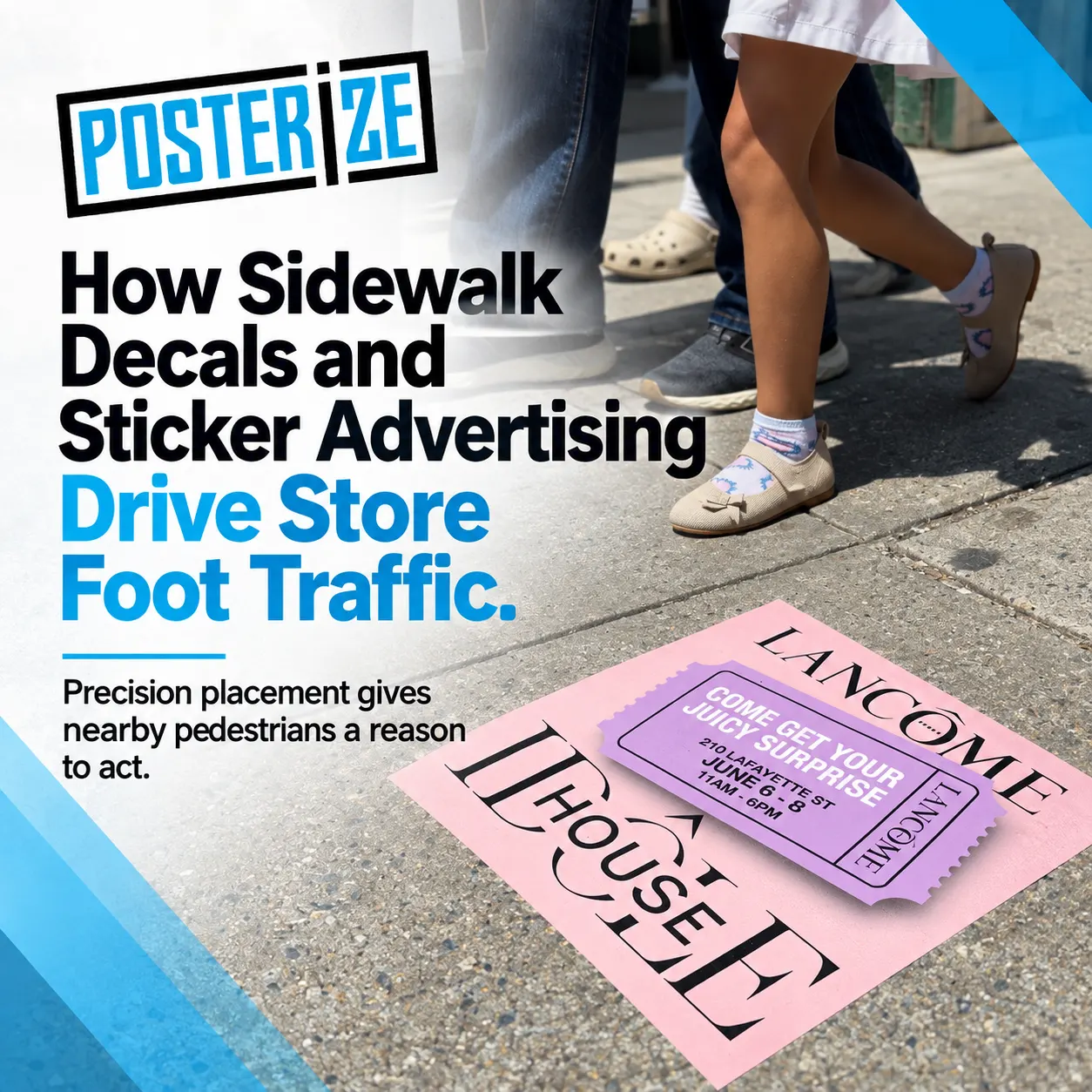
How Sidewalk Decals and Sticker Advertising Drive Store Foot Traffic
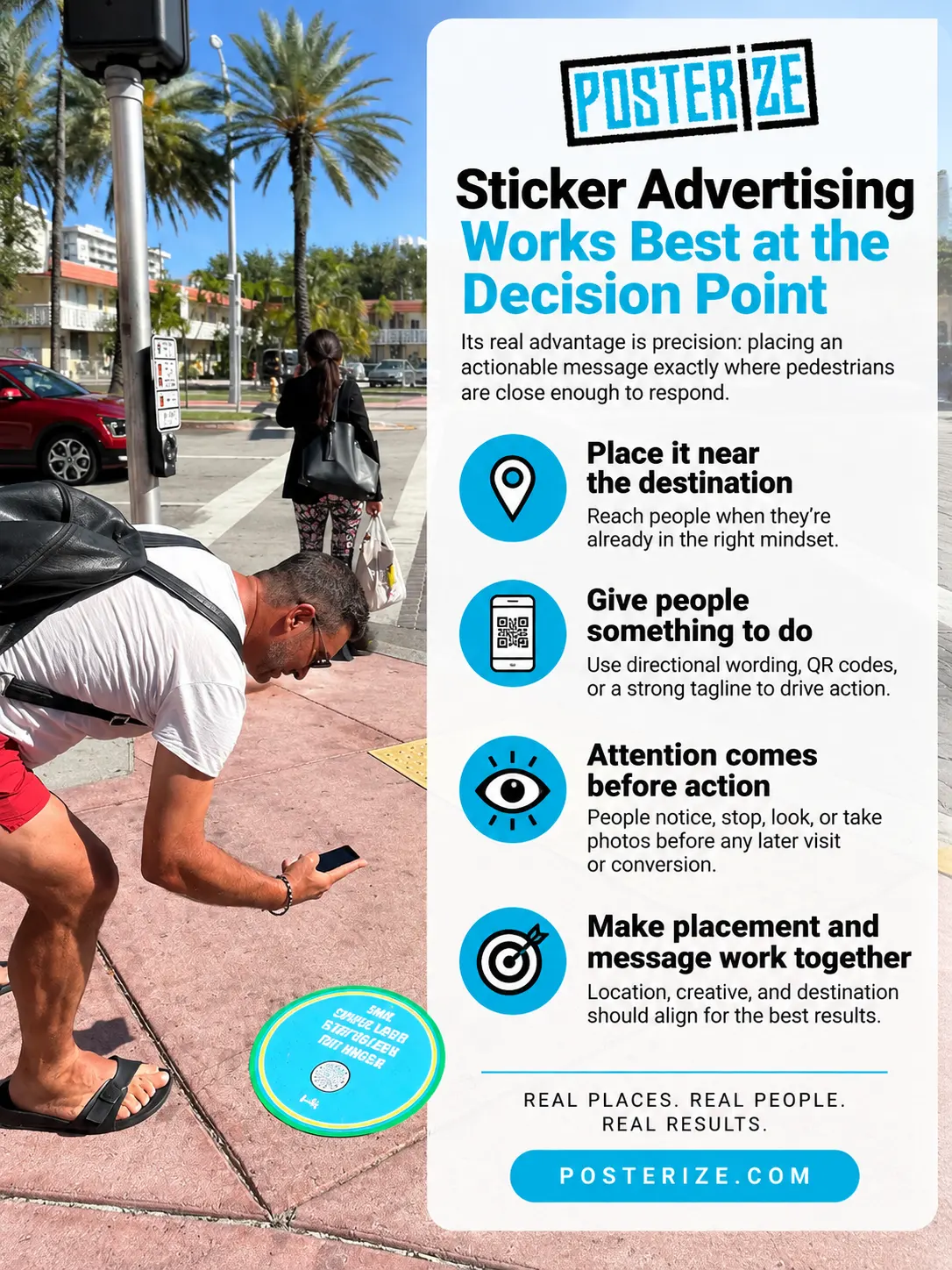
A busy sidewalk does not automatically produce store visits. People can pass a storefront without noticing it, understanding the offer, or realizing something relevant is nearby. Sticker advertising gives us a way to place an actionable message at a precise point where a pedestrian is close enough to respond. Our point of view is that precision is the defining advantage: the location, message, and nearby destination can be connected in one physical moment. That is different from simply putting more stickers into a market and hoping volume creates action.
For us, the sticker itself is not the conversion story. Placement can create the opportunity, but the message still has to give the pedestrian a reason to notice and a next step that makes sense in that exact location. That may mean directional wording, a QR code, a strong tagline, or concentrated placement close to a store, competitor, venue, or other specific destination. The useful question isn't how many decals you can place, but what a person can realistically do because the message appeared there.

Nearby Pedestrians Are Not Automatically Store Traffic
Foot traffic around a store is useful only if some of those people have a reason to engage with the business. Someone can walk directly past a storefront without registering the name, understanding the offer, or realizing that something relevant is available inside. For us, that creates an important distinction between being near an audience and actually communicating with it. Sticker advertising can help close that gap because we can concentrate placements around a very specific destination instead of relying only on broad exposure elsewhere. Physical proximity gives the message a chance to ask for action that would make less sense from farther away.
Retail out-of-home research gives useful context for why that proximity matters, even though it should not be treated as a sticker-specific conversion study. In a 2026 study conducted by The Harris Poll for the Out of Home Advertising Association of America, 59 percent of adults ages 18 to 64 said retail out-of-home advertising influenced purchase decisions when encountered immediately outside a store. That finding does not tell us how any one sidewalk decal will perform, and we do not use it that way. It does support the broader idea that physical advertising can play a different role when the consumer is already close to the place where an action can happen. Once placement is close enough to matter, the creative has to use that proximity.
What Makes Sticker Advertising Actionable?
Precision only matters when the message gives the pedestrian something useful to do with it. We can place decals close to a store, around a tightly defined area, near a competitor, or at another exact location that matters to the campaign. But an exact location does not rescue vague creative. The message should make the physical context more useful by connecting attention to a clear next step. Three approaches from our own work stand out because they give the placement an immediate job.
- Directional wording can connect the decal to a nearby destination. If the store, venue, or activation is close, the message can make that relationship obvious instead of expecting someone to work it out on their own.
- QR codes can create an immediate response path. A scan can move an interested pedestrian to campaign information, an offer, a landing page, or another next step while the physical location is still relevant.
- A strong or funny tagline can earn the moment of attention first. When the line is actually worth noticing, the decal has a better chance of interrupting the normal pattern of walking past without asking the pedestrian to decode a complicated message.
These uses are different, but they all depend on the same relationship between place and action. The message is delivered while the person is physically close enough for the destination to matter, which gives sticker advertising more than a general awareness role. We can use the location to make a direction, scan, or tagline feel immediate rather than abstract. That does not guarantee a store visit, but it gives the pedestrian a clearer reason to respond than a placement with no connection to where they are standing.
The same 2026 Harris Poll research found that 73 percent of surveyed adults ages 18 to 64 said they would visit a nearby store that same day if an out-of-home ad told them a particular product was available there for same-day pickup. Again, that is category-level retail out-of-home research rather than a performance benchmark for our sticker campaigns. Its value is in showing how a timely message and a nearby destination can make physical advertising more actionable. That is the same relationship we are trying to create when we put a useful message at a precise street-level decision point.
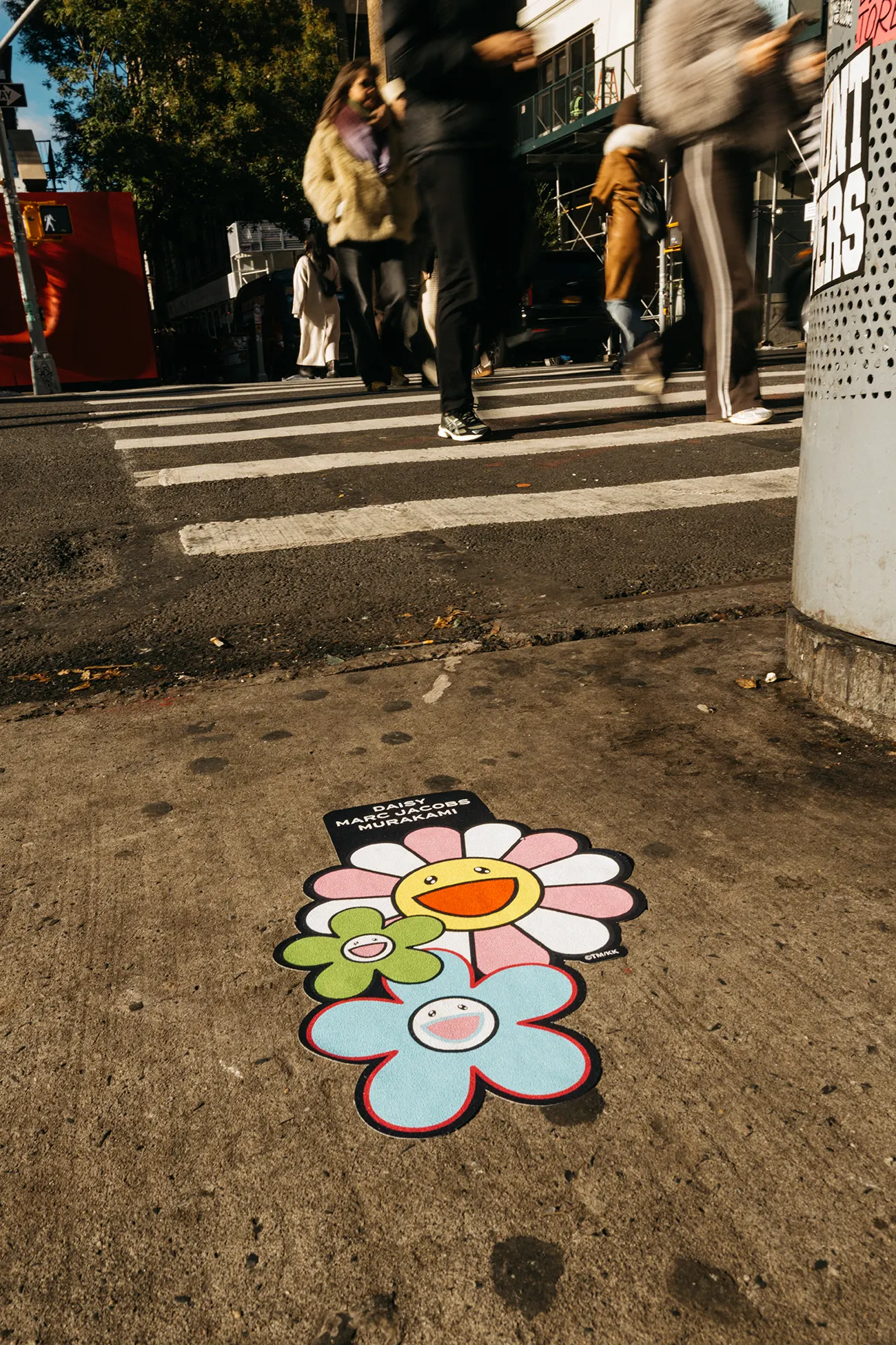
Attention Is the First Behavior We Can Actually See
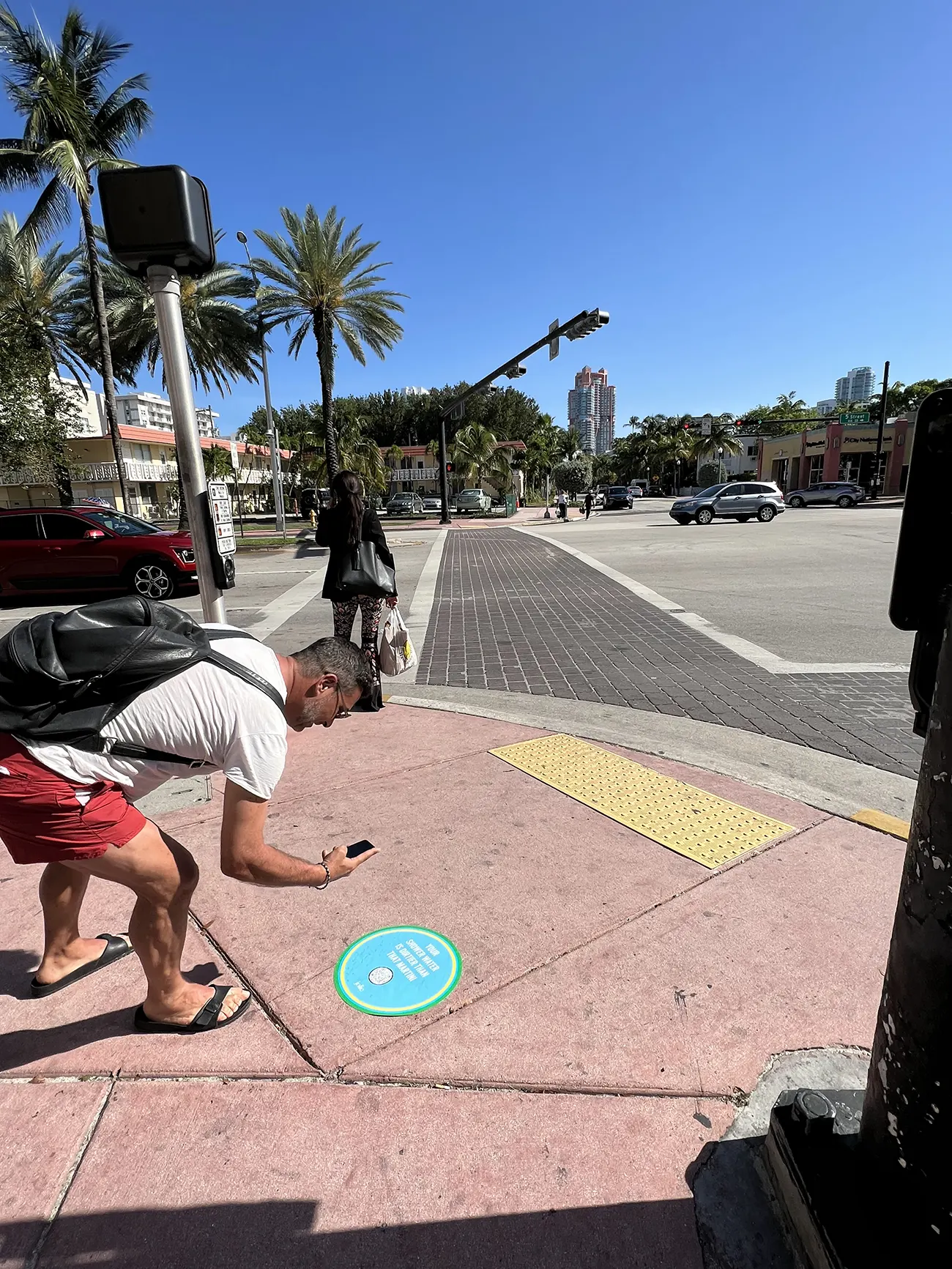
Before any sidewalk placement can influence where someone goes, it has to earn attention. We have photographs of people noticing decals, looking at them, stopping around them, and taking pictures. Those observations matter because they show real interaction with the physical work, rather than assuming everyone who passes a placement sees it. At the same time, we don't have evidence that lets us look at one of those photographs and claim the person then entered a particular store because of the decal. We keep that boundary clear because attention and conversion are not the same thing.
That distinction makes the observed behavior more useful, not less. A person who stops to look has interacted with the placement differently from someone who walks past without registering it, and someone who takes a photograph has engaged with it differently again. Those behaviors do not equal a sale, but they are the first visible step before any later response could happen. When we talk about pedestrian behavior, that is the level we can support directly from what we have seen.
That is also why we don't separate creative from location. An exact placement can put the message directly in front of the intended audience, but the message still has to be clear enough to earn and use that attention. A directional cue, QR code, or memorable line can turn a brief glance into a more purposeful interaction. Precision creates the opportunity, while the creative determines whether there is anything meaningful to do with it.
When Placement, Message, and Destination Align
The most useful way for us to think about sidewalk decals is not "where can we put stickers?" We work backward from the action the campaign is trying to make possible and the destination that gives that action meaning. If the goal involves a physical store, pop-up, retail activation, or another nearby location, the placement and message should make that destination more relevant when the pedestrian encounters the campaign. That creates a tighter relationship between sticker advertising and potential foot traffic than simply maximizing the number of decals distributed. The table below shows how those parts can line up without pretending that any one placement guarantees the final behavior.
Campaign situation | What placement contributes | What the message needs to do | Potential pedestrian response |
Store is close but easy to overlook | Puts the campaign into the immediate pedestrian environment. | Establish that something relevant is nearby. | Notice the store or consider going in. |
People need help finding the destination | Creates a touchpoint along the approach. | Give a clear directional cue. | Continue toward the location. |
Brand wants a digital action before the visit | Reaches people while they are physically close enough for the destination to matter. | Give a clear QR or response prompt. | Scan, learn more, then decide whether to visit. |
Campaign is competing for attention | Concentrates visibility at carefully selected points. | Give people a short reason to look. | Stop, look, photograph, remember, or engage. |
Brand wants to appear near a competitor or point of interest | Connects the message to a very specific piece of geography. | Make the relevance of that proximity clear. | Consider an alternative destination or offer. |
The table also shows why more stickers don't automatically mean stronger sticker advertising. A large volume of placements cannot compensate for a weak connection between the location, message, and intended action. A precise placement can use the physical context itself as part of the communication, which means the destination is no longer just an address buried somewhere in the creative. It becomes part of what the pedestrian is experiencing at that moment. That is the leverage we are looking for when the business objective involves foot traffic.
What Can We Actually Claim About Foot Traffic?
If the objective is store traffic, our reporting has to be as disciplined as the placement. Seeing people stop, look, or photograph the campaign tells us that the work is earning visible attention, and a QR code can create another measurable interaction when scans are tracked. Neither observation proves that every person who engaged with the decal subsequently walked into the store. We can say the campaign was positioned to support visits, that people visibly engaged with it, or that a tracked response mechanism generated activity when we have the data. We should not turn those facts into a conversion story that the evidence does not support.
That evidence boundary matters because the appeal of precision can tempt marketers to overstate attribution. The exact location can make a message more relevant, but relevance is not the same thing as a guaranteed visit. Our job is to connect placement, message, and destination in a way that gives the pedestrian a realistic next action, then measure whatever interactions the campaign can actually document. That keeps the argument stronger because we do not need an invented success story to explain why precise street-level placement matters.
Precision Is What Gives Sticker Advertising Leverage
For retail marketers, the opportunity is not simply to put branding on the sidewalk. Sticker advertising becomes more useful when we can place an actionable message where a pedestrian is already close enough for the destination to matter. The placement can create the opportunity, the creative can give the person a reason to respond, and the location can make that response immediate without pretending every interaction becomes a store visit. That is why we think in terms of precision rather than volume when the objective involves foot traffic. The sticker is the medium; the exact relationship between people, place, message, and destination is what gives it leverage.