Wheatpasting NYC: Why Location, Movement, and Street Conditions Matter
A wheatpasting campaign can cover much of New York City and still fail to create a strong street presence. The problem is not necessarily the number of posters or the quality of the creative. New York changes block by block, and placements that appear close together on a map can exist inside very different pedestrian environments. Effective wheatpasting NYC campaigns have to account for where people actually move, how they encounter the street, and what happens to the campaign after the posters are installed.
That makes location a more complicated question than simply finding available walls in desirable neighborhoods. The same campaign can move through SoHo, Union Square, Williamsburg, or Bushwick, but each area presents different transit patterns, pedestrian concentrations, sightlines, street activity, and physical surfaces. At Posterize Media, we plan around those conditions rather than treating the city as one large advertising zone. Brand recognition can develop from that presence, but it begins with getting the physical campaign right.
NYC Is Not One Advertising Environment
New York's density can make almost any busy neighborhood look promising from a distance. Once a campaign reaches street level, however, the differences become much clearer. The NYC Department of Transportation's Pedestrian Mobility Plan separates city streets into five categories based on anticipated pedestrian demand, ranging from baseline streets to global corridors. DOT considers pedestrian generators including transit, businesses, schools, parks, and tourist attractions because those uses affect how many people are likely to move through a particular street. (New York City Government)
That distinction matters for wheatpasting because pedestrian activity isn't evenly distributed just because two locations share a ZIP code, borough, or neighborhood name. A residential side street, a retail strip, a subway approach, and a street serving a major attraction can produce completely different opportunities for a poster campaign. We see that difference in our own NYC planning, where available environments can range from licensed sites in SoHo to guerrilla walls in Bushwick. The question is not whether one neighborhood is universally better than another; it is what kind of movement surrounds the locations available within it.
For a brand, that changes what "citywide" should mean. More neighborhoods can increase geographic reach, but broader coverage is not automatically a stronger campaign if the placements have little relationship to the audience or objective. A launch targeting nightlife, for example, creates a different street plan from a retail opening or an entertainment campaign centered around a specific venue. We therefore look at the city as a collection of distinct environments rather than a single market that can be covered evenly.
The Street Determines How a Poster Is Actually Encountered
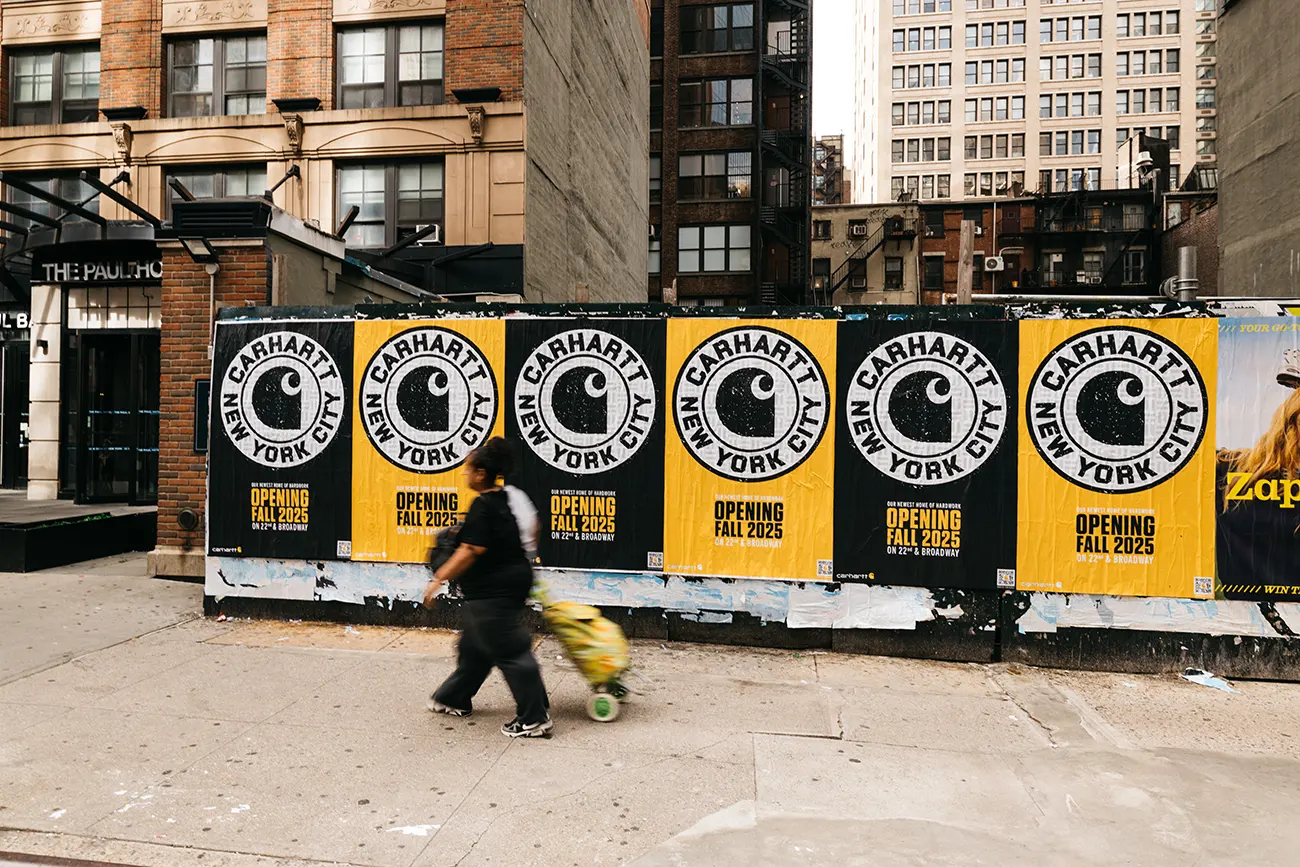
A location can look strong on a campaign map and behave very differently once someone stands on the sidewalk. Pedestrians approach walls from different directions, emerge from transit points, stop at intersections, queue outside venues, move through shopping areas, or pass quickly through streets with little reason to pause. NYC DOT makes the relationship between transit and pedestrian movement explicit: every transit rider becomes a pedestrian during some portion of the trip. That makes the areas surrounding subway and bus access important movement systems, not simply points on a map.
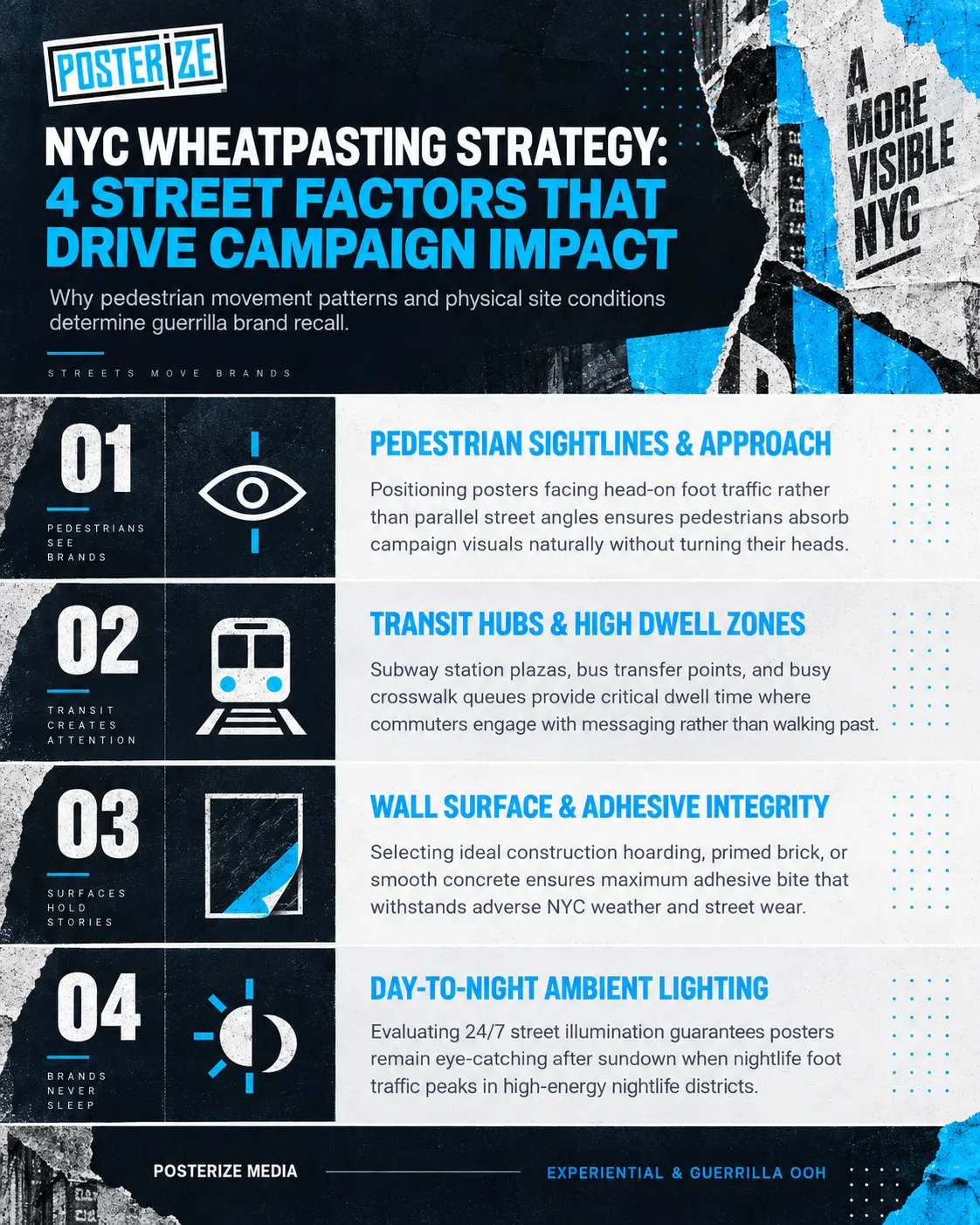
When we evaluate a wheatpasting location, several street-level conditions matter together:
- Approach: A wall may be prominent from one direction and nearly invisible from another, so the way pedestrians enter the block matters.
- Transit movement: Subway exits and bus connections can repeatedly feed people into streets, but the useful placement still depends on where those people go next.
- Pace: Crossings, retail areas, venue queues, and other natural pauses create a different viewing environment from an uninterrupted walking route.
- Sightline: Street furniture, scaffolding, parked vehicles, construction, other advertising, and the geometry of the block can change what is visible at pedestrian level.
- Connection: Several placements become more useful when they relate to the same audience movement or campaign objective, rather than existing as isolated marks across the city.
These are practical distinctions, not guarantees that one type of location will always outperform another. A busy subway exit doesn't automatically make every nearby wall valuable, just as a quieter street isn't automatically useless. What matters is the relationship between the audience, the placement, and the surrounding environment. That is why we plan around actual street conditions rather than assigning value based only on neighborhood reputation or estimated foot traffic.
A Campaign Footprint Should Make Sense as One Campaign
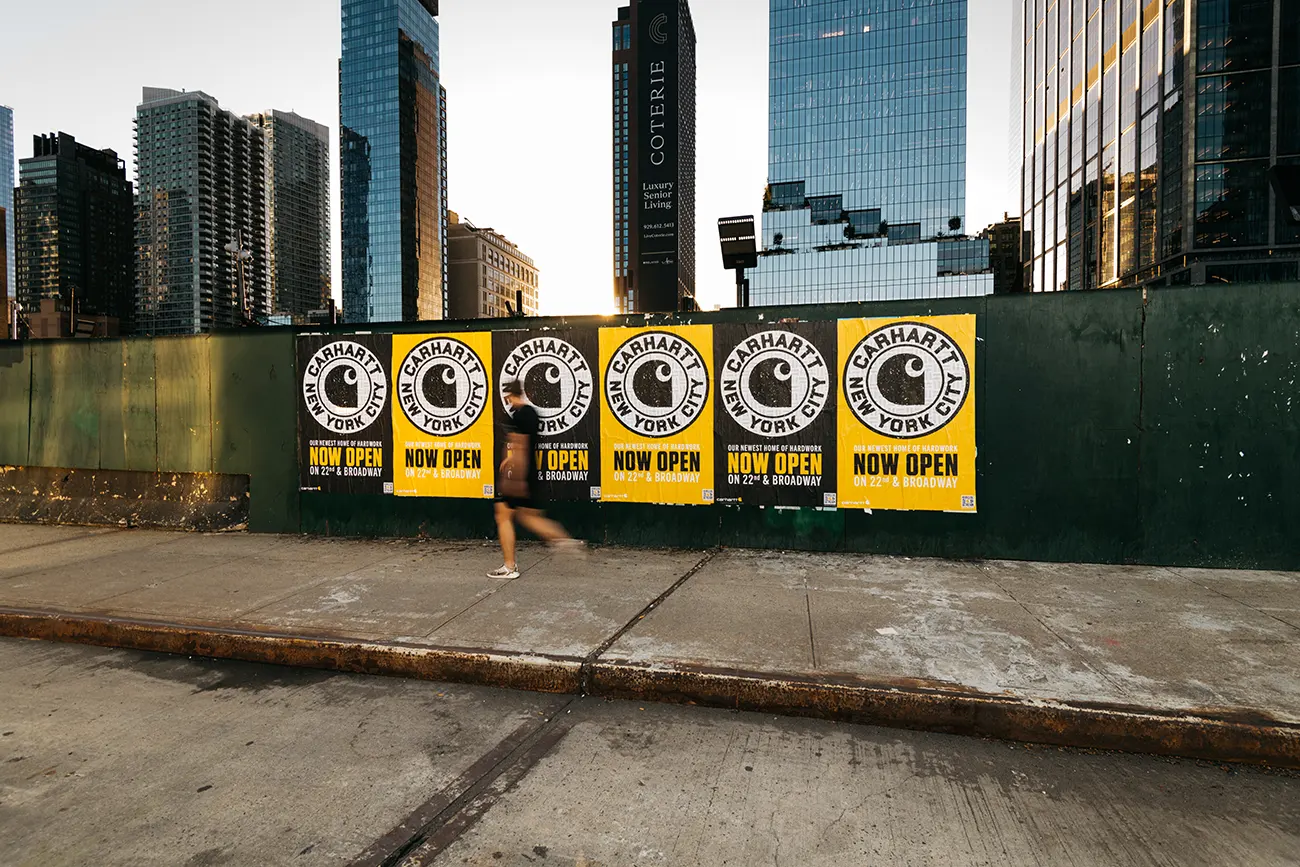
Concentration does not mean that a wheatpasting campaign has to remain within a few blocks. New York campaigns can cross neighborhoods and boroughs when the larger footprint supports the audience and objective. The problem begins when geographic spread becomes the objective by itself, and locations are added mainly because they make the campaign look larger on a map. At that point, the plan can become a collection of individual placements rather than a connected street presence.
A useful way to evaluate the footprint is to look at what each type of location contributes before adding it:
NYC Street Condition | What It Changes | Campaign Question |
Major transit or pedestrian corridor | Large volumes of people may pass through, often following established routes | Does this movement overlap with the audience we are trying to reach? |
Retail or nightlife district | Pedestrians may move more slowly, gather, shop, wait, or return within the same area | Does the campaign belong naturally within this environment and time of day? |
Multiple connected placements | The campaign can occupy a recognizable part of the street rather than one isolated surface | Do these locations work together, or are we adding them only for coverage? |
Quieter or disconnected placement | The poster may still reach a relevant audience, but it serves a different role from a dense corridor | Is there a specific reason this location belongs in the plan? |
Changing or competitive wall environment | Visibility can shift after installation | Can the location be checked, documented, and maintained during the campaign? |
This is also why two campaigns with the same poster count can look completely different once they are installed. One may create a clear presence in several intentionally selected areas, while another distributes the same inventory across unrelated parts of Manhattan and Brooklyn. Don't judge either strategy by poster quantity alone. We start with where the brand needs to show up and then determine what footprint can create that presence in the real city.
Wheatpasting Does Not Stop Changing After Installation
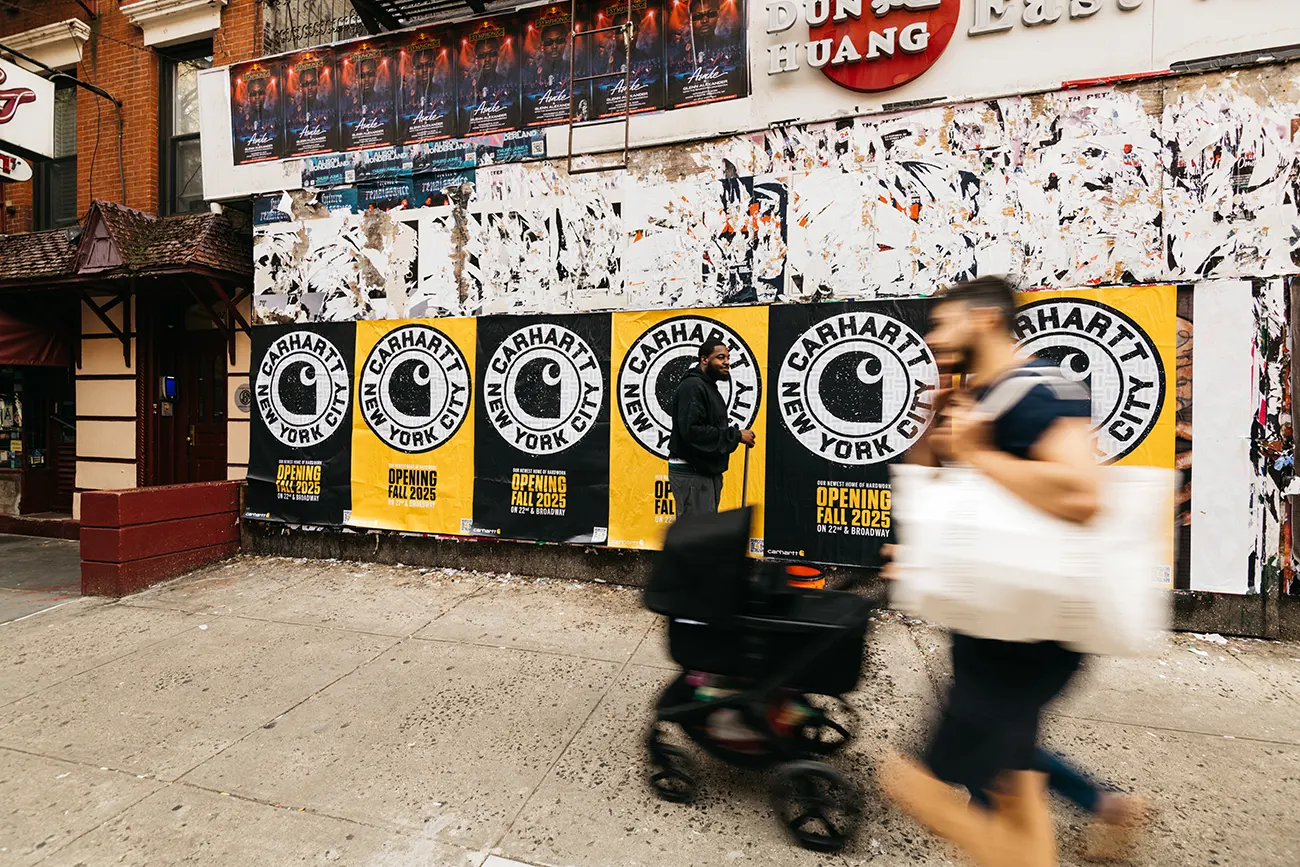
The physical nature of wheatpasting gives the format its character, but it also means the campaign doesn't remain frozen after installation. Posters live on walls, barricades, and other surfaces exposed to weather, pedestrian activity, other postings, construction, and normal street changes. A location documented on the first night can look different later in the campaign. That makes installation quality and field documentation part of media execution, not administrative work that happens after it.
Some of the changes our teams have to account for include:
- New postings or obstructions that reduce the amount of creative still visible.
- Surface and adhesion issues that affect how well a poster remains installed.
- Weather and ordinary street wear that alter the condition of paper and exposed edges.
- Construction or physical changes that affect a wall, barricade, sidewalk, or sightline.
- Differences between the planned and installed footprint when real-world conditions require field adjustments.
A campaign should be judged by what is actually present on the street, not only by what was approved before installation. Posterize Media uses campaign mapping, documentation, photography, placement information, and proof-of-performance assets so clients can see how the plan was executed. Those materials also give our team a practical record of where work was installed and what happened in the field. Posterize's broader street-marketing services are built around that combination of planning, installation, documentation, and reporting because physical campaigns require all of those pieces to remain connected.
That is especially important in New York, where several variables can change within a relatively small geographic area. A campaign may move from a dense commercial corridor to a quieter connecting street and then into another heavily trafficked area within only a few blocks. The creative has not changed, but the context around it has. Good wheatpasting planning recognizes those differences instead of assuming every wall delivers the same kind of exposure.
Build the Campaign Around the New York It Will Actually Occupy
Effective wheatpasting NYC is ultimately about making the campaign fit the physical city rather than forcing a predetermined poster count onto a map. Geography determines where the campaign appears, pedestrian movement determines how people encounter those locations, and street conditions determine how the work holds up once installed. When those pieces support one another, the campaign has a much better chance of creating a coherent, recognizable presence. If your brand is planning a NYC wheatpasting campaign, Posterize Media can help map the locations, produce and install the work, document the campaign, and build a street plan around the audience you actually want to reach.