How to Tell if Guerrilla Marketing is Working for Your Business
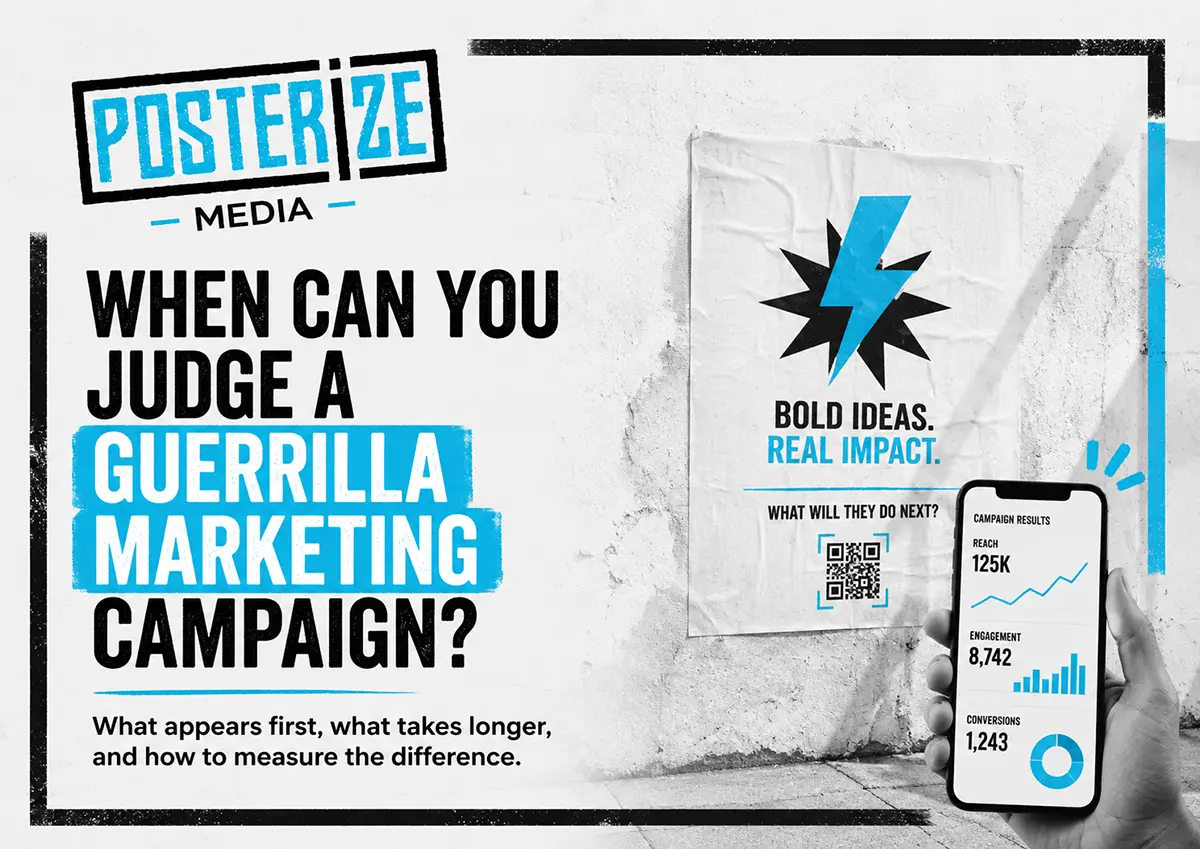
What Guerrilla Marketing Proves First, and What Takes Longer to Measure
Some guerrilla marketing evidence appears right away. The posters are installed. The photos come in. The locations are documented. People begin scanning, sharing, searching, or photographing the work.
But those signals do not all prove the same thing. A street campaign creates different kinds of evidence at different points in time. First, it shows whether the work was delivered. Then it shows whether people started responding. Only later does it become possible to judge broader impact, such as recall, lift, visits, leads, or sales influence.
At Posterize Media, we separate those timelines rather than forcing every campaign into a single answer. Proof of installation appears fast. Public response develops during the live campaign. Business impact needs more time, more context, and better measurement.
The campaign becomes easier to judge when each type of evidence has a clear question and standard. Delivery evidence answers the question of whether the work happened. Response evidence shows whether people reacted. Impact evidence shows whether the campaign contributed to larger marketing outcomes.
| Evidence type | Main question | Standard of proof |
| Delivery evidence | Did the campaign go live where and when planned? | Installation records, photos, field notes, location records, and coverage documentation. |
| Response evidence | Did people react while the campaign was live? | Scans, website visits, social mentions, photos, search movement, local attention, and early engagement patterns. |
| Impact evidence | Did the campaign influence awareness, recall, visits, leads, or sales? | Baseline data, campaign-specific tracking, longer observation windows, lift research, matched markets, or control-based measurement. |
Day One Shows Whether the Campaign Was Delivered
Before anyone talks about awareness, recall, or sales, the campaign must exist in the right places. The first evidence is proof of performance. In out-of-home advertising, proof of performance means showing that the contracted work was delivered. For a street campaign, that means documented locations, installation dates, campaign photos, field notes, and coverage records.
This is the part of the campaign that should be visible almost immediately. A client should be able to see whether the work went live where planned, whether the creative looked right in the street, and whether the selected areas received coverage. That does not prove brand lift. It proves the campaign was executed.
A rendering may look clean in a presentation. The street introduces parked vehicles, scaffolding, competing signs, weather, poor sightlines, and blocked placements. Documentation matters because it shows how the campaign looked in the real world. It also gives the team a chance to fix weak placements while the campaign is still live.
We invite all our clients to come along for posting and first-day showings. We like when you get to see the work in action, not just hear about it.
The First Question to Answer
The first stage of evidence should answer one practical question: did the campaign go live where and when it was supposed to? Strong documentation gives the client a clear view of execution before anyone makes claims about awareness or sales. It also gives the campaign team a record of what happened in the field, which matters when conditions change after planning is complete.
- Completed placements and locations.
- Installation dates.
- Photographs of the creative in context.
- Coverage across selected neighborhoods.
- Field notes on access, weather, obstructions, or placement issues.
- Planned-versus-actual location records when available.
This evidence matters because it separates execution from opinion. A campaign should not move into claims about awareness or sales before the basic delivery question is answered. If the work was not installed properly, every later metric becomes harder to interpret. If the work was installed properly, the next question becomes whether the market responded.
We offer full transparency, always, which is why we provide all clients with Live Link, a web service to give you up-to-the-minute information about the campaign.
The Street Response Starts During the Live Campaign
Once the campaign is up, early signals may appear within hours or days. Someone scans a QR code. A passerby photographs the work. A local account shares it. Website visits increase. A local reporter, creator, or neighborhood page shows interest.
These signs matter, but they need context. A QR scan proves someone took action from a placement. It does not prove the campaign changed brand awareness. A social post proves someone found the work worth sharing. It does not prove the full target market saw the campaign.
The campaign goal decides which early signals deserve attention. An awareness campaign might value photos, mentions, and branded search movement. A launch campaign might focus on scans, landing page visits, event interest, or search activity. A retail campaign might examine store-visit patterns near selected locations.
Research on out-of-home advertising shows that public media performs well in terms of consumer recall. That supports the value of repeated visibility in the real world. It does not mean that one poster automatically creates measurable recall. Creative, placement, market fit, repetition, and exposure all matter.
Early Signals Need Limits
Early response should not be ignored, but it should not be treated as proof of everything. A campaign with strong QR activity may have a clear response signal, yet still need a better landing page, offer, or follow-up path. A campaign with modest scans may still create useful awareness if people photograph, share, or recognize the creative.
This is where reporting often goes wrong. One attractive number becomes the whole story. A social post gets attention, so the campaign is called a success. Sales stay flat for several days, so the campaign is called a failure. Both conclusions may be too simple.
Good reporting separates what each signal proves. Scans show direct action. Social posts show share behavior. Search movement may show interest. Store visits or inquiries may show commercial response. Brand recall and lift require a stronger measurement plan.
The First Week Shows Whether Visibility Is Concentrated Enough To Matter
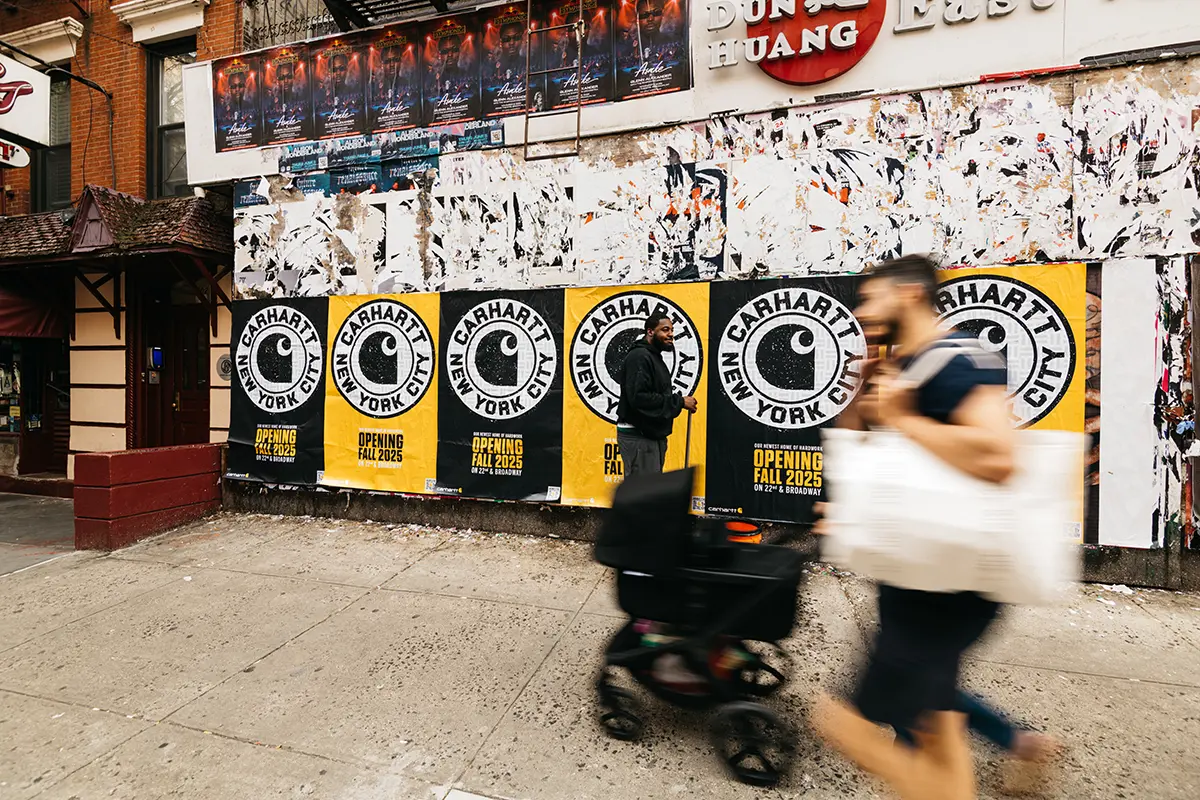
A campaign does not gain strength because dots appear on a map. It gains strength when placements create repeated visibility in the same neighborhood, corridor, or route. A scattered campaign gives coverage. A concentrated campaign gives repeated exposure.
People move through cities in patterns. They pass the same corners, commute through the same corridors, and return to the same commercial areas. One encounter introduces the message. Repeated encounters make it more familiar. That is why campaign geography matters as much as poster count.
A map full of placements is not automatically a strong campaign. The placements need to work together. They need to reach the right streets, routes, storefront areas, nightlife blocks, campus paths, commuter corridors, or event zones. The goal is not to make the map look full. The goal is to make the brand harder to miss in the right market.
Look For Momentum, Not One Viral Moment
Many businesses assume a guerrilla marketing campaign succeeds only if it goes viral. That standard makes little sense for most local, regional, or niche campaigns. A street campaign should not be judged only by one explosive moment. It should be judged by whether the right people saw it repeatedly, noticed it, and had a clear way to respond.
Virality is not useless. A strong post, press mention, or creator share may extend the campaign beyond the street. But virality is not the only meaningful outcome. For many brands, the more valuable result is sustained visibility in the right places.
Nielsen has identified brand recall as a major driver of brand lift in emerging media research. That supports the importance of memory. It does not turn every scan, share, or visit into proof of brand lift. It supports the broader idea that recognition and recall matter, even when they do not appear immediately in a sales report.
Prove The Work Before Trying To Prove The Sale
The harder question comes later. Did the campaign cause a purchase, visit, inquiry, or sale? That answer rarely comes from placing installation photos beside a sales chart. Pricing, promotions, paid search, social ads, public relations, seasonality, weather, and existing brand demand may also affect the result.
A sales chart is not an attribution model. If sales rise during a campaign, that movement is worth studying. It does not automatically prove causation. If sales stay flat during the first few days, that does not automatically mean the campaign failed.
This is why delivery and impact need to stay separate. Delivery covers what the campaign team controls. Impact covers how the market responds. Causation requires a stronger measurement design, such as baseline data, unique landing pages, matched neighborhoods, holdout areas, exposed-versus-control surveys, geo testing, or post-campaign brand-lift research.
A campaign may be executed exactly as planned without creating an immediate sales jump. It may also create useful awareness that does not show up in a simple conversion report. Memory, recognition, content reuse, retargeting value, and future demand often sit outside the cleanest short-term numbers. That does not make them worthless. It means they need a different standard of measurement.
Decide What Success Means Before Launch
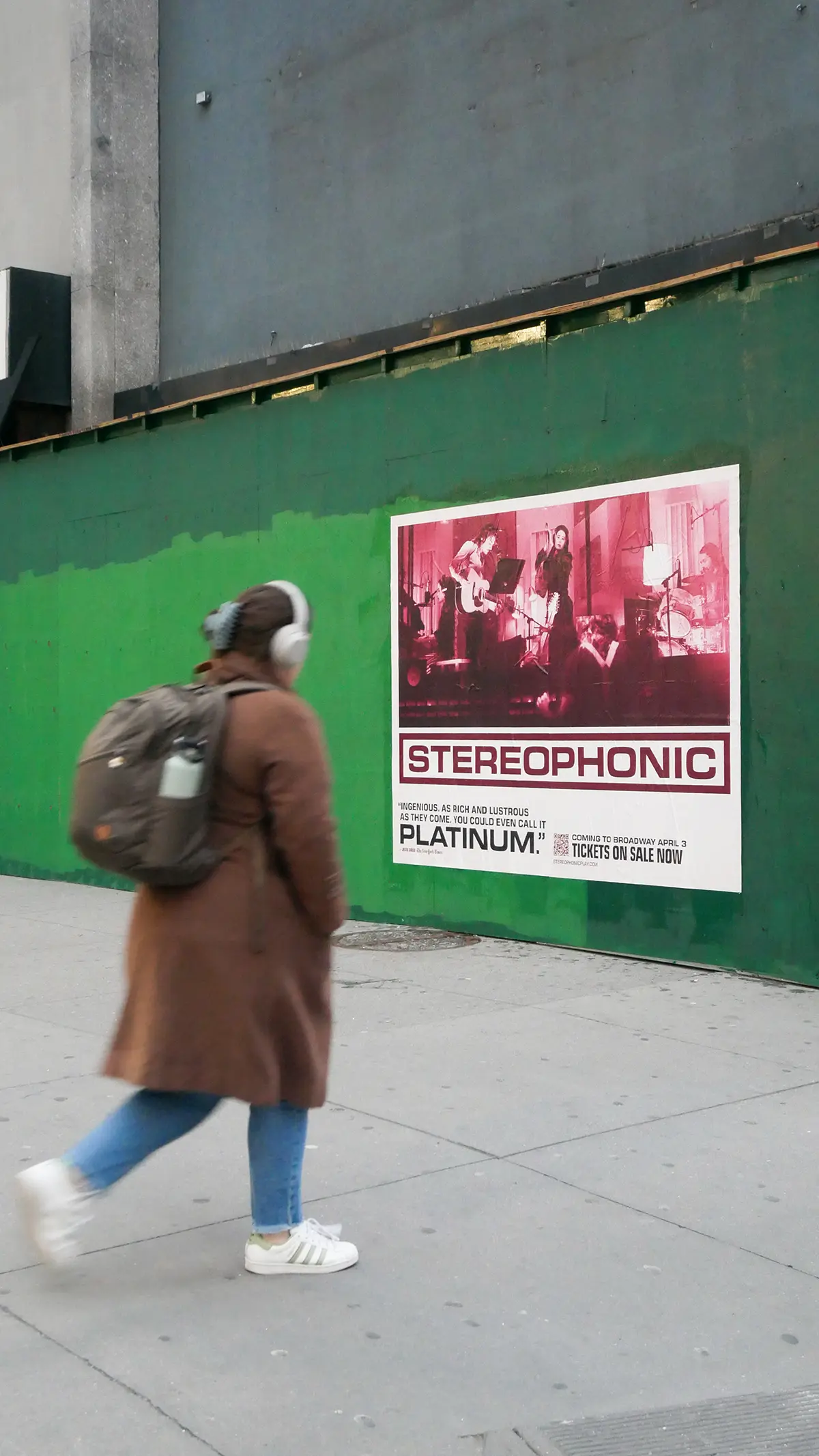
The best measurement plan starts before production. A clear goal shapes the market, format, message, call to action, placement strategy, documentation, and reporting window. Without that plan, the campaign gets judged by whichever number looks most exciting or disappointing afterward.
Before launch, clients should define the campaign’s primary objective and the evidence that will matter most. This keeps the campaign from being judged by a random number after the fact. It also makes reporting cleaner because each metric has a purpose before the work hits the street.
- One primary objective.
- A few supporting indicators.
- A pre-campaign baseline where possible.
- Unique links, QR codes, phone numbers, or landing pages where useful.
- The neighborhoods, corridors, or routes that matter most.
- A reporting window that continues after the campaign.
- The difference between delivery proof, response signals, and impact evidence.
This planning step prevents bad expectations. A campaign built for awareness should not be judged only by immediate sales. A campaign built for direct response should have a measurable call to action. A campaign built for retail visibility should connect placements to store areas, routes, and foot traffic patterns.
What Usually Becomes Visible First
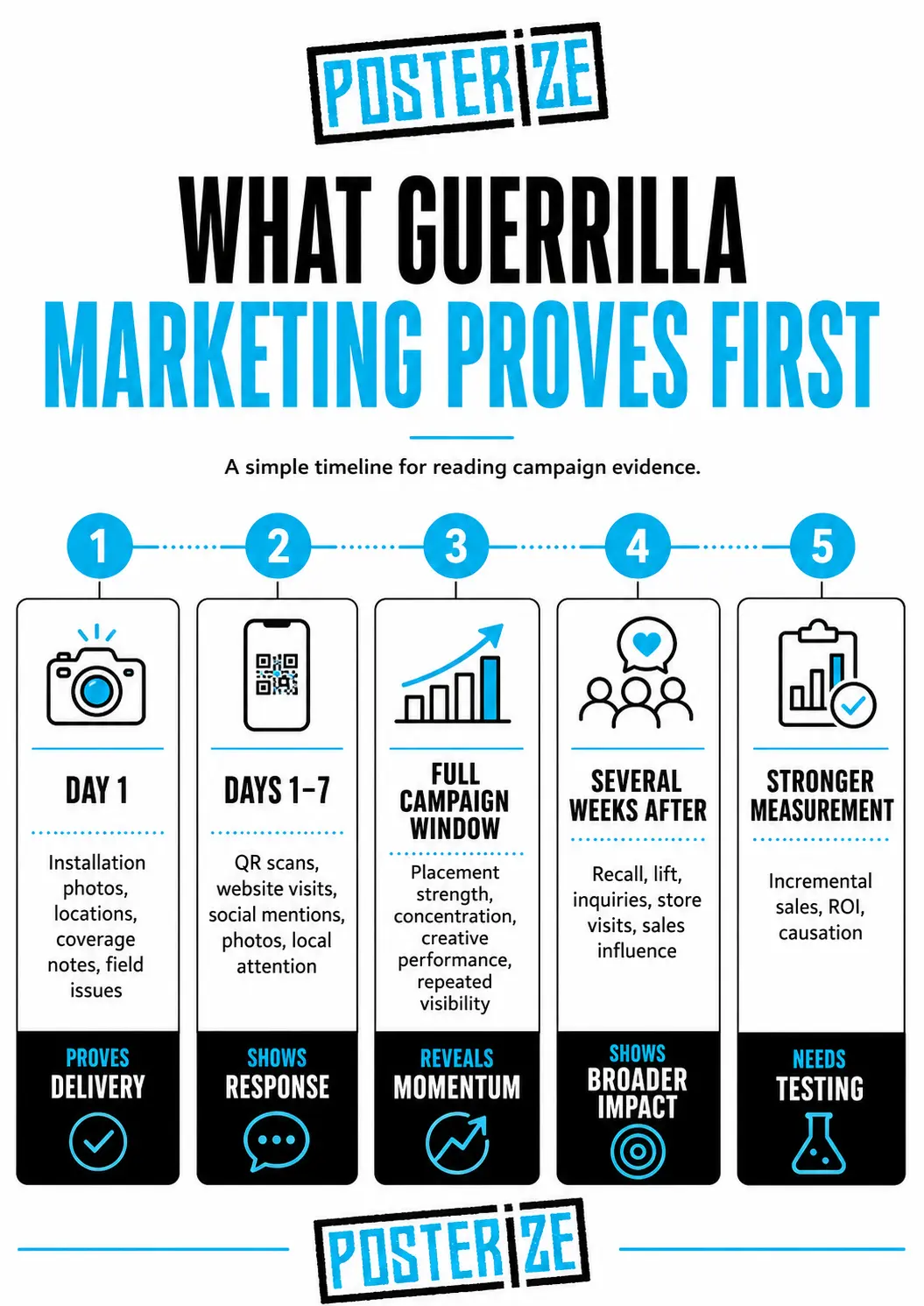
A cleaner way to judge timing is to match each period with the type of evidence available. The timeline should not promise guaranteed results by a fixed date. It should show what the campaign can prove, measure, or estimate as more information comes in.
| Campaign period | What becomes visible | What it proves |
| Day 1 | Installation records, photos, locations, coverage notes, and field issues. | The campaign went live, and the work was delivered. |
| Days 1 to 7 | QR scans, website visits, social mentions, photos, branded search movement, and local attention. | People started responding during the live window. |
| Full campaign window | Placement strength, concentration, creative performance, neighborhood response, and repeated visibility. | The campaign had enough presence to judge execution and response patterns. |
| Several weeks after | Recall, lift, content reuse, retargeting value, inquiry trends, store visit patterns, and sales influence. | The campaign may have contributed to broader marketing impact. |
| Only with stronger measurement | Incremental sales, true lift, ROI, and causation. | The campaign effect was isolated from other marketing and market factors. |
This timing matters because each stage answers a different question. Day one answers the question of whether the work was delivered. The live campaign answers the question of whether people reacted. The follow-up period helps evaluate broader impact. Stronger measurement is needed when the client wants to make a causal claim.
What Clients Should Expect
At Posterize Media, our job is to put the campaign into the street, show where it landed, document how it looked, and help clients read the response without confusing instant activity with long-term impact. Some evidence appears the first day. Some signals develop over the live window. The broader picture usually becomes clearer after the campaign has had time to work.
The clearest way to judge guerrilla marketing is to ask the right question at the right time. On day one, the question is whether the campaign was delivered. During the live window, the question is whether people are responding. After the campaign, the question is whether the work contributed to awareness, recall, visits, leads, or sales.
Those are different standards of proof. Treating them as a single number leads to poor reporting and unrealistic expectations. Delivery is provable. Response is measurable. Impact is estimable. Causation requires stronger measurement.