Will Guerrilla Marketing Work for My Business?
Partnering with a Guerrilla marketing company works best when a business needs attention in a specific place, from a specific audience, for a specific reason. The appeal is easy to understand because it can create a visible local presence without asking a company to behave like a national advertiser. Still, street media does not replace planning. Creative, placement, timing, production, installation, documentation, and follow-up need to support one another. When one piece is missing, attention may never turn into useful business activity.
**It is important to recognize that working with a legit Guerrilla Marketing Company comes with a cost and requires a real budget. Yes, this is an investment in your business that can yield amazing results, but your expectations have to be set within your budget.
The Right Question Is Not Whether the Idea Is Bold Enough
A campaign does not become effective simply because it looks unusual. The better question is whether the concept helps the right people notice and understand the business. A bold idea still has to connect to a real audience, a real location, and a real next step. Before we recommend a street campaign, we want to know what the audience should do.
The campaign needs one primary action, not five competing goals. That action gives the creative a job and helps the placement plan stay focused. Without that focus, even an impressive installation can leave people unsure about what comes next. The clearest campaigns usually start with one of these goals:
- Visit a new location.
- Attend an opening.
- Scan a specific offer.
- Book an appointment.
- Follow a social account.
- Visit a pop-up.
- Remember the brand before a future purchase.
Each goal changes the way the campaign should be planned. A pop-up campaign may need urgency, a date, and a map-based call to action. A brand awareness campaign may need stronger repetition and more recognizable visual identity. A booking campaign may need a clear service promise and a fast mobile path. As the U.S. Small Business Administration recommends, businesses should define their target market, sales process, marketing goals, action plan, and budget. The format may feel unconventional, but the business decision should be clear.
Guerrilla Marketing Still Requires a Real Budget
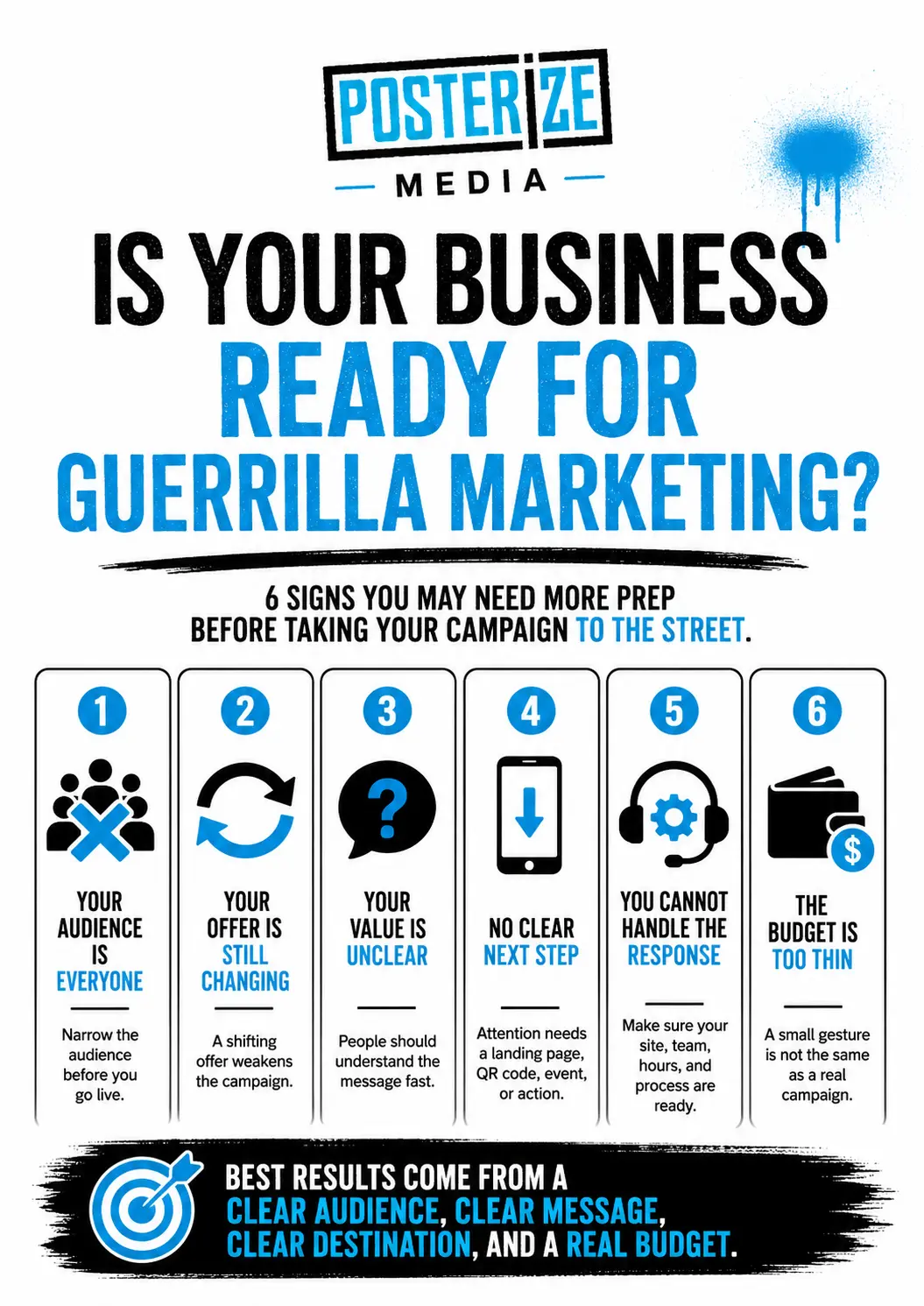
Guerrilla marketing appeals to large, medium, and small businesses because it feels more accessible than traditional advertising. That does not mean it is cheap, improvised, or built on a single clever idea. A real street campaign involves creative direction, material production, placement planning, installation, labor, documentation, and reporting. Those parts have to work together before the campaign reaches the street.
This matters because many businesses ask about wheatpasting, wild posting, projections, and other street media with expectations that do not match the work involved. A request for a large poster campaign on a tiny budget usually means the campaign hasn't been thought through yet. The issue is not whether the business is small. The issue is whether the business has a serious enough goal, audience, and budget to make the tactic worthwhile.
For that reason, guerrilla marketing is usually a better fit for growth-stage brands, product launches, pop-ups, events, hospitality groups, retail concepts, entertainment campaigns, and businesses trying to create visible momentum in a specific market. It is usually not the right fit for a local service business looking for the cheapest possible lead source. A plumber, mold technician, or home repair company may get more value from search, local SEO, paid ads, reviews, and referral systems before investing in street media. That does not make street media wrong for small businesses. It means the business model, moment, and budget need to fit the tactic.
The Business Type Matters Too
A guerrilla marketing company is not automatically right for every small business. The tactic works best when public visibility, cultural relevance, timing, and local momentum matter to the sale. A campaign has more room to work when the business benefits from people seeing the brand in the real world, recognizing it again online, and associating it with a specific place, launch, event, or moment.
That makes guerrilla marketing a strong fit for certain types of small and emerging businesses. The best candidates usually have a clear audience, a defined market, a visual brand, and a reason to create attention now. These are the kinds of businesses that often make sense for street media:
- New brands entering a local market.
- Product launches.
- Pop-ups and temporary retail.
- Restaurants, bars, hospitality groups, and nightlife concepts.
- Fashion, beauty, wellness, fitness, and lifestyle brands.
- Entertainment, music, film, and event campaigns.
- Retail concepts with strong neighborhood appeal.
- DTC brands that want real-world visibility.
- Campus, venue, festival, or neighborhood-specific campaigns.
Some businesses are better served by more direct channels first. A local plumber, mold technician, roofer, or emergency service company usually needs search visibility, reviews, paid search, service pages, and fast lead capture before street media. Those businesses often win when people already have demand and need help now. Guerrilla marketing works better when the goal is to create visibility, presence, memory, and momentum before or around demand.

Local Visibility Comes from Precision
Small businesses rarely need to cover an entire city. They need to become difficult to miss in the parts of the city that matter. A strong local campaign starts with where the right people already move, gather, shop, work, eat, or spend time. The placement plan should be based on audience behavior, not on a broad map of busy areas.
We map campaigns around audience behavior, not population. A busy street has little value when the people passing through are unlikely to need the product or act on the message. On the other hand, a tighter group of neighborhoods, retail corridors, nightlife areas, campus areas, venue districts, or event corridors can create stronger visibility because the work appears where the audience already has a reason to pay attention. This helps the campaign feel more relevant than random.
Repetition matters here. One placement may create a moment, but a planned group of placements can create familiarity. The goal is not to appear everywhere. It is to establish a strong enough presence in the right area so that the campaign feels deliberate rather than scattered. A focused footprint often performs better than a thin campaign spread across too much territory.
Your Message Has to Work Quickly
Street audiences do not stop to decode a crowded advertisement. The creative has to communicate fast enough for the location and viewing conditions. The visual idea, brand identity, and call to action should support one another. A person should understand the basic point without needing to study the work.
A strong offer might be an opening date, a limited release, a neighborhood event, a service promise, or a useful reason to scan. The message should make the next step easy to understand. If people only remember the visual but not the business, the creative is doing part of the job and missing the rest. Current out-of-home research also highlights the value of creativity and contextual relevance. People are more likely to respond when the work is visually appealing, entertaining, useful, or connected to the moment.2
Capitalizing on Attention the Right Way
A business, regardless of size, should decide what to do after someone notices the work, before anything is installed. The follow-up path should lead to one clear destination. That destination needs to match the message people saw on the street. Attention is easier to waste than most businesses realize, especially when the next step is unclear.
The goal or the destination must be defined: it must be clear. It can be a:
- Dedicated website landing page
- Trackable QR code to website or app install
- Introducing a retail location
- An event
- A product launch,
- Appointment request
- Social profile with current campaign content
A poster promoting a limited event should not send people to a general homepage where the event is hard to find. A campaign inviting appointment requests should lead to a fast, mobile-friendly way to make one. The street message and the destination should feel like parts of the same experience.
Out-of-home exposure can prompt searches, website visits, social engagement, and store visits. That connection becomes more useful when the campaign gives people a direct route from the street to the next action. Attention is only the first step. The business still needs a path that turns interest into activity.
Documentation Protects the Investment
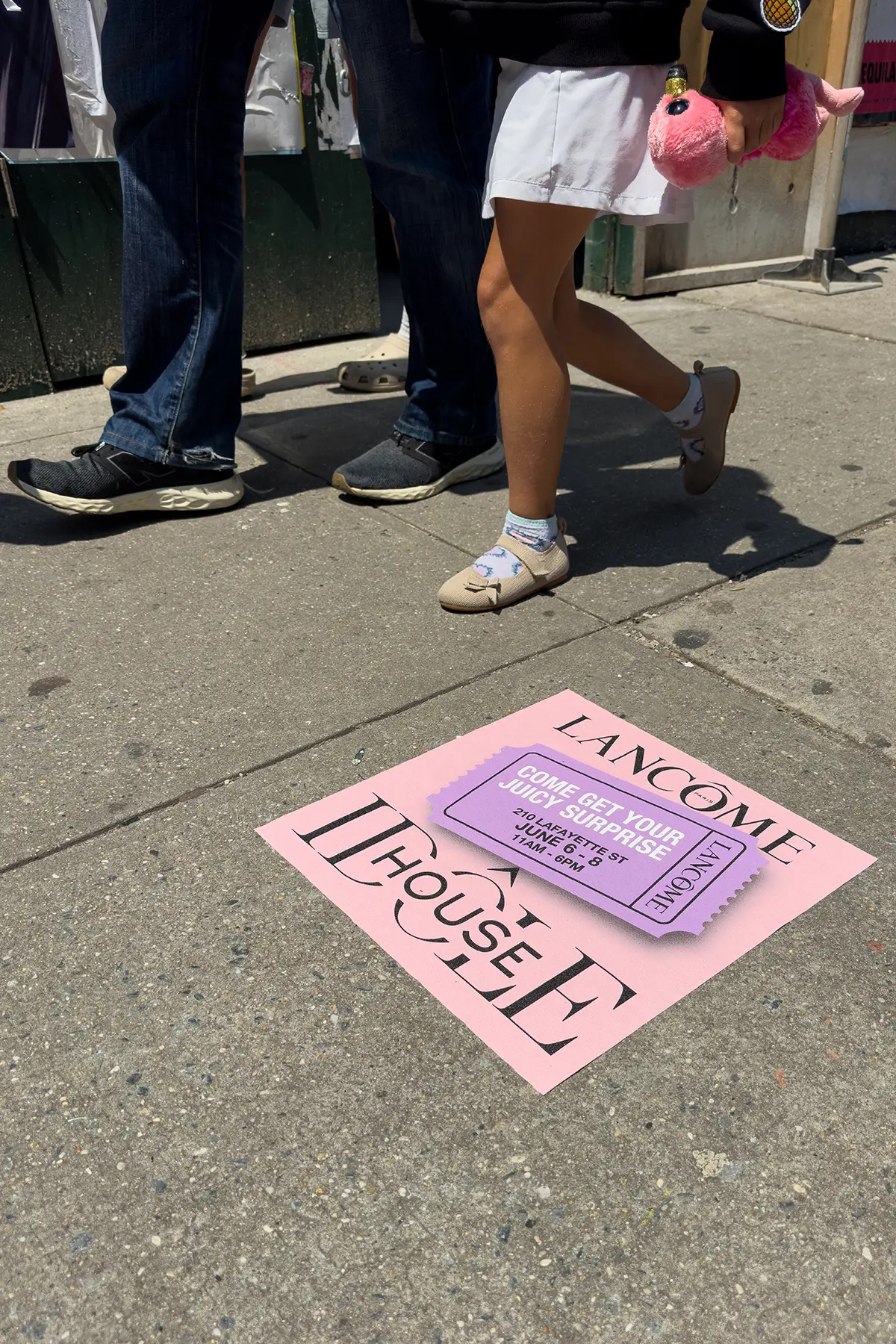
Proof matters, whether a campaign has dozens or thousands of placements. Small and large business owners alike should not have to assume the work reached the field as planned. They should be able to see where the campaign appeared, how it looked, and whether the installation matched the plan. Documentation gives the business a record of delivery before anyone starts judging results.
Our process emphasizes installation photography, placement verification, campaign mapping, and reporting. Documentation confirms that materials were placed in the intended areas and shows how the work appeared in its real environment. The business gains assets that can support social content, internal reporting, and future planning. Those assets also help the business understand which locations, formats, and messages should be considered again.
Proof of performance does not prove that every placement resulted in a sale. It separates delivery from impact. First, we verify what went live. Then the business can compare scans, visits, inquiries, event activity, social response, or other relevant outcomes against the campaign period. That gives the campaign a cleaner evaluation and helps future planning stay grounded.
A Business Succeeds When it’s Seen
At Posterize Media, we connect ideas to fieldwork. We plan the placement strategy, produce the materials, manage installation, document the campaign, and report what went live. We are not interested in pushing every company into a tactic that does not fit. The right campaign starts with a clear business case, not only a creative idea.
Guerrilla marketing makes sense when the business is ready to win the right streets at the right moments, with a clear message, a real budget, and a follow-up path that turns visibility into opportunity. It is not the cheapest way to get attention, and it is not the right fit for every local company.
It works best when a business has something timely to put into the world and enough budget to make the work feel deliberate. When those pieces are in place, street media can give a business a presence that feels specific, visible, and hard to ignore.