How Guerrilla Marketing Creates Moments People Want to Talk About
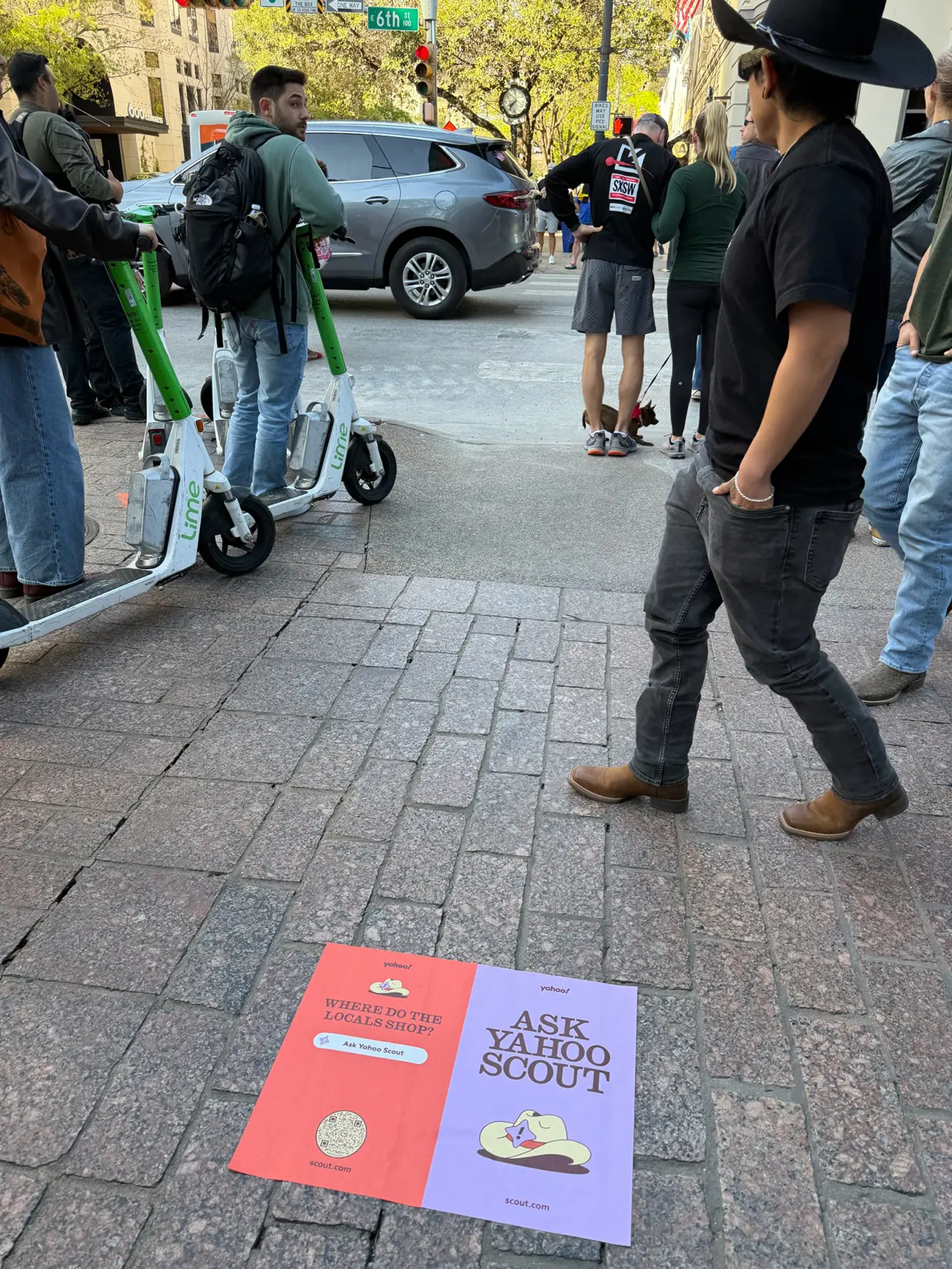
A product launch can reach the right audience and still pass through the market without creating a moment anyone associates with it. The media plan may be complete, the creative may be approved, and the launch calendar may be set, but the campaign can still lack a visible point of arrival.
That is where experiential and guerrilla marketing can change the role of the launch. Instead of relying solely on advertisements in familiar channels, we can bring the campaign into the streets, buildings, neighborhoods, and public spaces people already move through. The question becomes: how do we create a moment people want to talk about?
Guerrilla marketing gives a product launch a physical presence by bringing the campaign into streets, buildings, neighborhoods, and public spaces people already move through. The goal is to create a moment the audience can encounter, recognize, and carry into conversation.
Traditional Advertising Can Deliver the Launch without Defining It
Thinking outside the box does not mean abandoning the channels that already serve a clear purpose. Paid search can capture people actively looking for the product, category, or solution. Social and video advertising can introduce the launch to selected audiences. Email can reach existing customers and prospects directly. Public relations, influencers, and outdoor media can extend the campaign through additional touchpoints.
A conventional launch plan may include:
- Paid search: Captures demand from people already looking for the product, category, problem, or related solution.
- Paid social and video: Introduces the launch to selected audiences and builds repeated exposure.
- Email: Reaches existing customers, prospects, partners, and subscribers directly.
- Public relations and influencers: Add context, third-party attention, and additional distribution.
- Traditional outdoor media: Builds repeated geographic visibility across a market.
These channels can distribute the launch effectively, but they do not always give it a defining public presence. People recognize familiar advertising formats and know how to move through them. That familiarity helps audiences understand what they are seeing, but it can also make the campaign easier to filter, discount, or pass over.
The opportunity is not to hide the advertising. It is to give the launch something more than another placement. A public-facing campaign can create a physical point of encounter that feels tied to the product, audience, timing, and market.
A Public, Guerilla Marketing Campaign Gives Launch a Place in the World
Most advertising appears inside a predefined media unit. A commercial runs during a program. A sponsored post enters a social feed. A display advertisement appears beside an article. A billboard carries a message on a structure people already understand as advertising inventory.
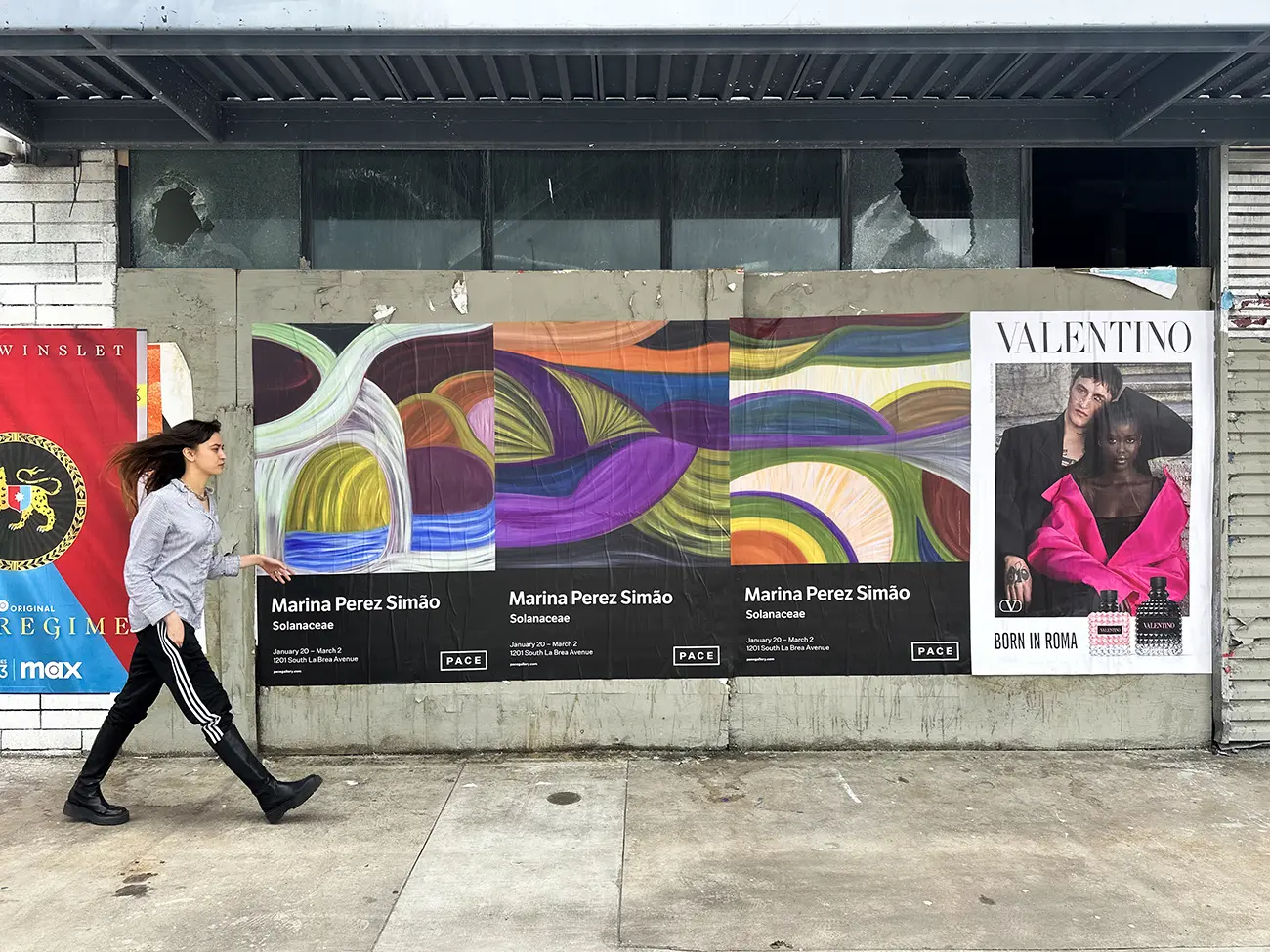
Experiential and guerrilla marketing allow the physical environment to take on a different role. Wheat-pasting can create a concentrated visual presence across selected streets and neighborhoods. Projection advertising can temporarily transform a recognizable building. Stickers, stencils, installations, and other street-level formats can make the launch visible inside the market rather than only through a screen or media placement.
|
Standard media placement |
Physical launch campaign |
|
Distributes a message through an established advertising format. |
Gives the launch a visible presence within the physical market. |
|
Uses the media unit to carry the creative. |
Uses the setting, surface, scale, or location as part of the creative idea. |
|
Primarily builds reach, frequency, targeting, or intent capture. |
Adds distinctiveness, context, and a public point of encounter. |
|
Usually begins and ends inside its original channel. |
Can also produce photography, video, creator content, public relations material, and digital assets. |
The setting changes what the campaign can communicate. A building can contribute scale, architecture, cultural meaning, or a connection to the surrounding neighborhood. A coordinated poster campaign can establish visual continuity across several locations and make the launch feel present throughout an area. A temporary execution can create urgency because it is tied to a specific date, event, or opening.
Creative physical media performs best when the environment reinforces the message rather than functioning as an unusual location for its own sake. The surface, scale, placement, and surrounding context should help explain the idea. When they do, the campaign has a stronger chance of building brand recognition and creating a persuasive public encounter.
For a marketing manager, that is the central distinction. The value is not that the campaign appeared somewhere unexpected. The value is that the physical setting contributed something the same message could not have delivered inside a standard media format.
The Setting Has to Strengthen the Launch Idea
An unconventional format does not automatically make a campaign strategic. The location, visual system, audience, product, and message still have to work together. Surprise may earn the first look, but relevance determines whether the audience understands why the campaign is there.
The setting has to accomplish several jobs:
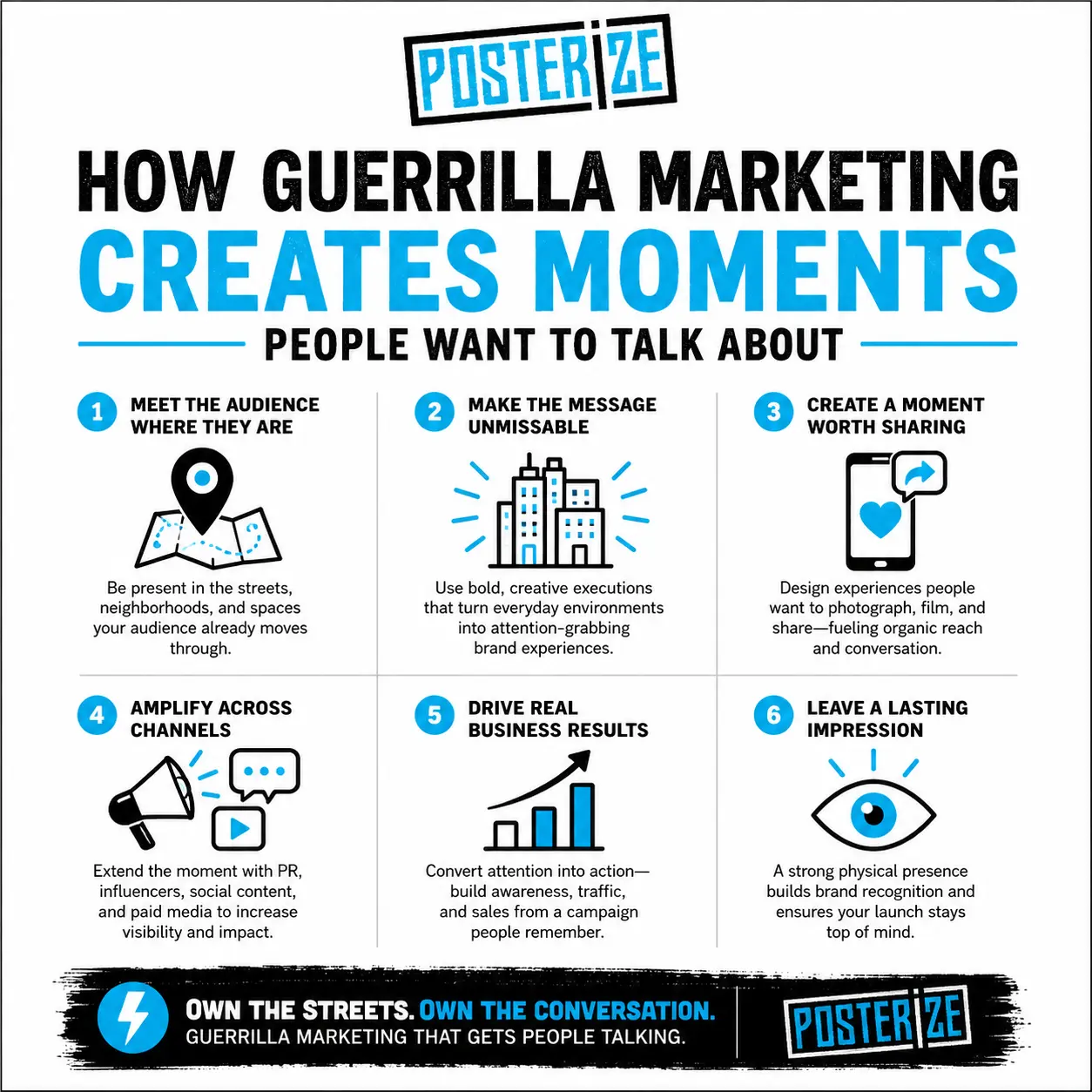
- Reach the right environment: The campaign should appear where the intended audience already moves, gathers, shops, works, or spends time.
- Support the product idea: The location, surface, scale, or format should reinforce what is being launched.
- Communicate quickly: The central visual and message must work within the short attention window of a public setting.
- Preserve brand recognition: The audience should understand which brand created the execution.
- Create physical value: The campaign should offer something the same advertisement could not provide inside a standard media unit.
- Fit surrounding behavior: The execution should reflect whether people are walking, commuting, attending an event, approaching a store, or moving through a neighborhood.
The same principle can lead to very different campaigns. A fashion launch may use concentrated wheat-pasting to make a collection feel established within a culturally relevant district. An entertainment campaign may use a projection to transform a building associated with nightlife, music, or performance. A retail opening may place street-level creative along the routes people use to approach the location. A consumer-product launch may use scale or repetition to create an immediate sense of market presence.
The tactic should follow the job. Selecting a projection, poster campaign, installation, or street team before understanding the audience and launch objective reverses that process. We start with what the market needs to notice, where the launch needs to appear, and what the campaign should communicate.
People have more reason to react when the execution creates a visible transformation, a clear relationship between the product and the place, or a moment that feels temporary and specific. Strong visuals, meaningful scale, and a clear setting can make the campaign easier to understand and photograph. None of that guarantees conversation, but it gives the audience something more substantial to respond to than another advertisement occupying another media slot.
The Physical Campaign Should Strengthen the Entire Launch
A public campaign should not operate as a separate creative project beside the rest of the media plan. It should create a real-world focal point that the social, public relations, influencer, paid media, and content teams can document and distribute.
The physical execution can supply:
- Campaign photography showing the launch inside the target market
- Installation, time-lapse, event, or live campaign video
- Creator and influencer material captured around the execution
- Visual assets for paid social and display advertising
- Images and footage for public relations outreach
- Landing-page visuals connected to the launch
- Organic social content built around the physical campaign
- Search, site traffic, and retargeting opportunities generated by public awareness
The street campaign creates the original moment. Photography and video preserve it. Social, creators, public relations, and paid media extend it to people who were not physically present. Search campaigns and landing pages can capture the interest that follows. Retargeting and email can continue the relationship after someone visits the site or engages with the campaign.
The physical and digital components should form one connected launch path. The public execution should not be treated as a separate idea alongside the media plan. It should give the rest of the launch something real to amplify.
What the Marketing Manager Needs From Posterize Media
A marketing manager does not need to choose the exact wall, building, neighborhood, poster format, projection surface, installation method, or geographic footprint before beginning. Those decisions should follow the launch requirements rather than come before them.
The useful starting information is:
- What is launching
- Which audience needs to notice it
- Which markets or neighborhoods matter
- When the launch must become visible
- What the audience should understand
- What action should follow the encounter
- What budget, geographic scope, and campaign duration are realistic
We use those inputs to shape the campaign approach. That may involve identifying the appropriate street-level formats, determining the production requirements, establishing the installation footprint, coordinating the physical execution, and documenting what went live. The goal is not to force every launch into the same tactic. One campaign may need concentrated wheat-pasting across several neighborhoods. Another may need a projection that creates one highly visible moment. A third may require several physical formats working together across multiple cities.
The client is not only purchasing posters, projections, production units, or installation hours. The larger investment is in creating a visible public presence around the launch. That presence should feel connected to the product, audience, market, and timing, while also supplying material the larger media plan can carry forward. We can build the campaign around the response the brand wants to create, but the execution still has to earn that response once it enters the market.
Create the Moment the Other Channels Can Carry
Traditional media can distribute a launch across the channels people already use. Experiential and guerrilla marketing can give that launch a physical moment those channels can extend.
When the setting, format, creative, audience, and timing work together, the campaign becomes more than another placement. It becomes something the market can physically encounter, recognize, and potentially carry into conversation.
If your next launch needs more than another conventional placement, we can help turn the product, audience, market, and timing into a public campaign people can experience in the real world.